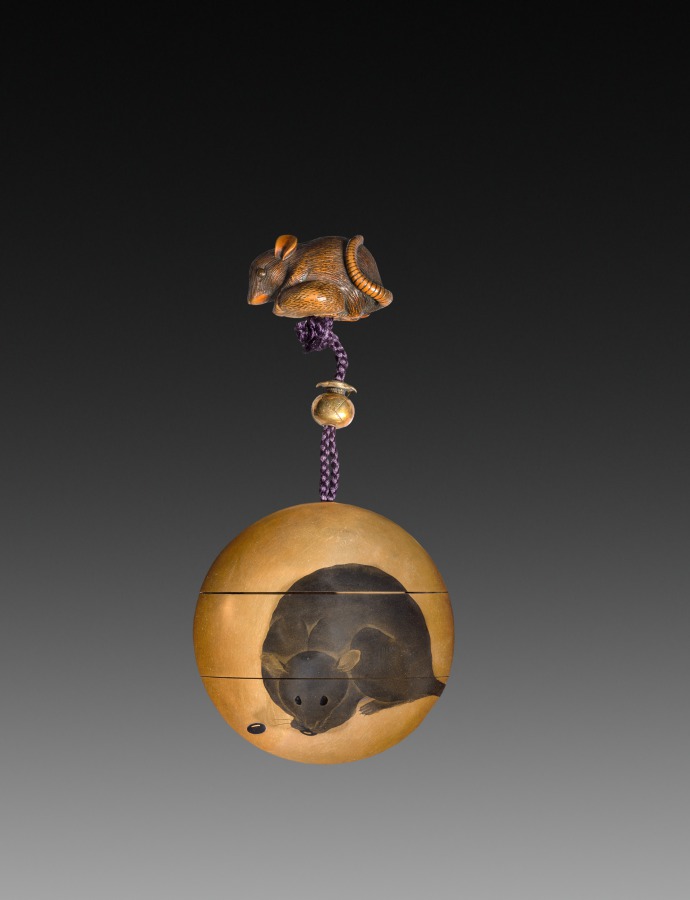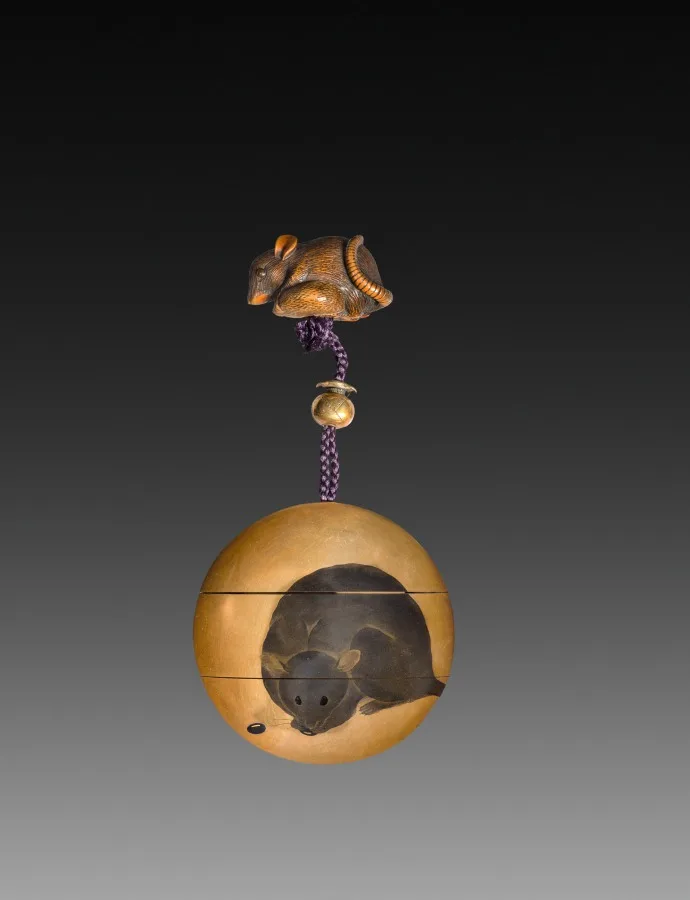
A mouse on a small case becomes a three-part joke when its cord, cinch, and toggle are read together.
The round case gives the first clue: a mouse bends toward beans on its golden surface. Follow the purple cord upward and the same food-related theme continues in other materials. The metal cinch resembles a tied bag, while the carved wooden toggle is another mouse holding a nut. The museum describes these parts as a coordinated expansion of the case’s subject.
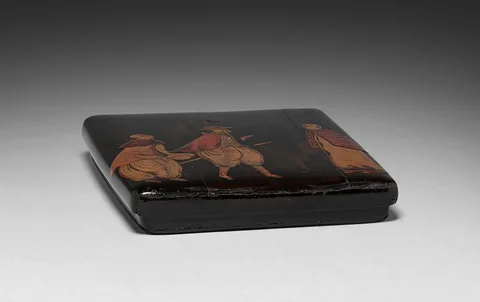
The object is an inrō, a small case whose attached cord and fittings are integral to how it is carried. The seam across its body is therefore as important as the animal picture. Lacquer with sprinkled gold powder creates a rich surface, but the design’s wit depends on comparing several functional components rather than admiring one isolated motif. Read it beside the Writing Box with Europeans: both are decorated containers, yet this smaller object distributes its imagery across a movable assembly. Its mice belong to a particular scene of raiding food stores, not a universal symbolic code for every rodent in art.
The museum supplies the identification of the cinch as a tied food bag and the toggle as a mouse with a nut. This short reading does not establish an individual owner or the case’s exact contents.