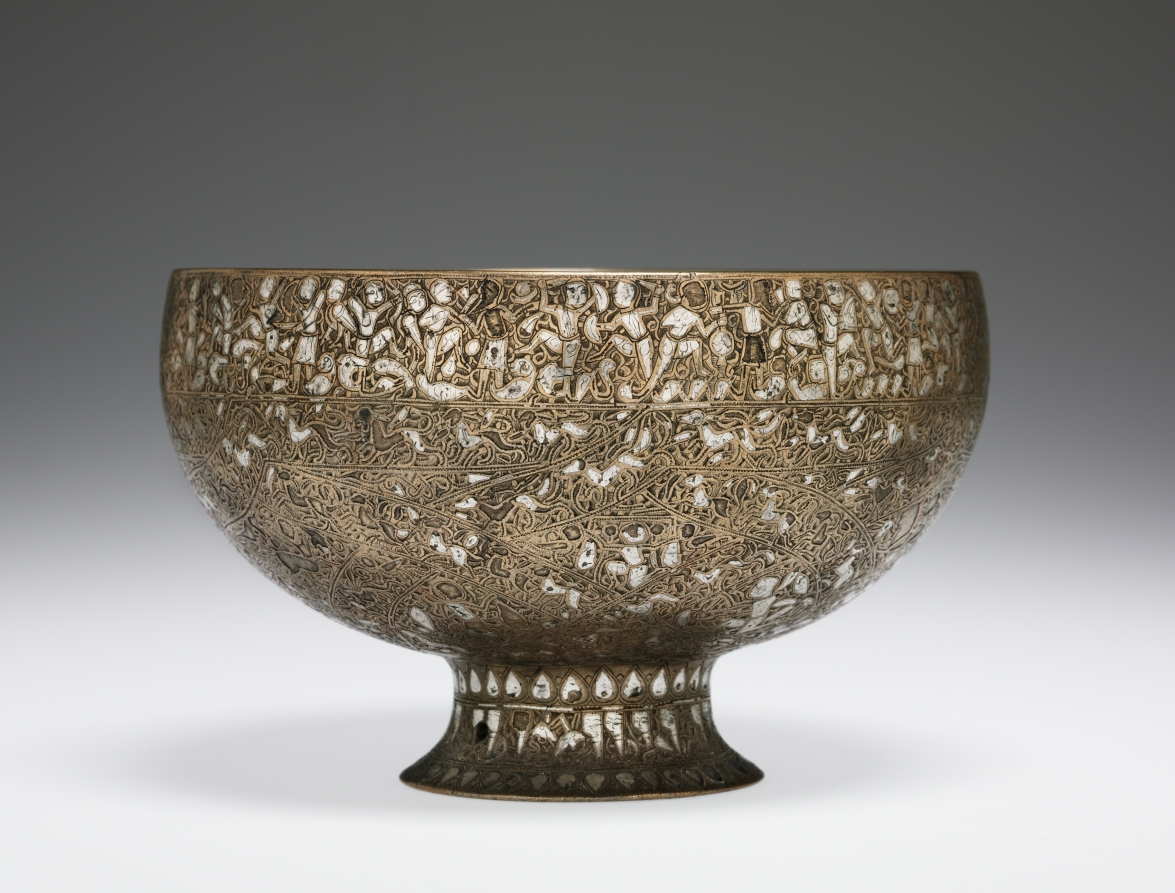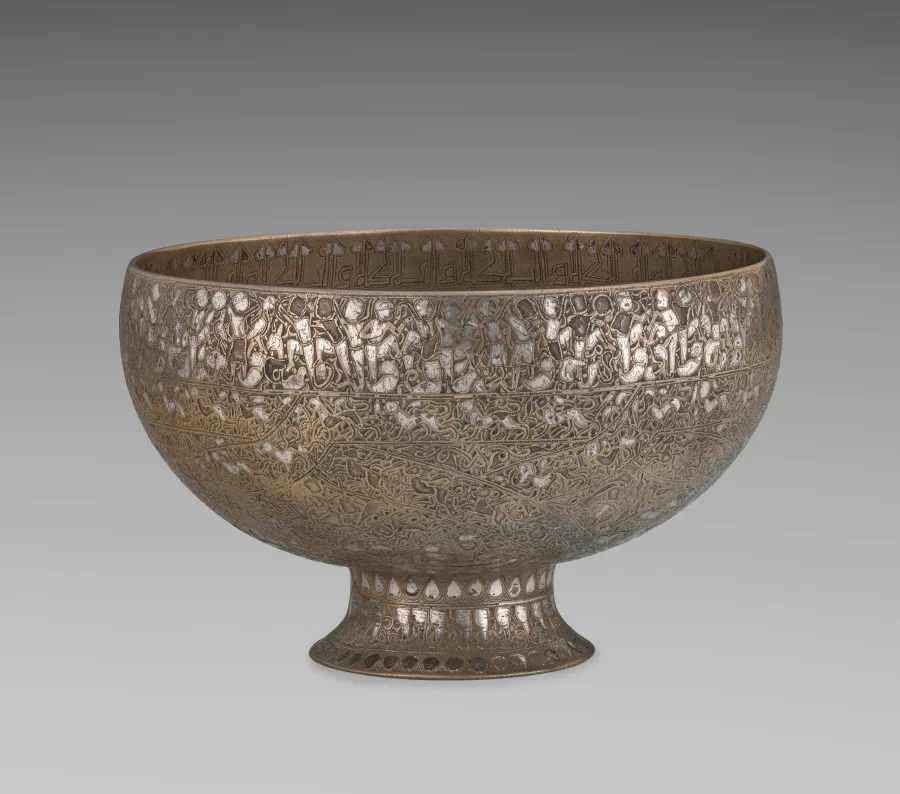
Figures become letters around a cup’s rim, asking the eye to move between reading an inscription and discovering small bodies.
Begin just below the rim, where bright forms rise and bend across a broad horizontal band. The museum identifies an inscription made from human figures, animals, and birds: a form known as animated script. It offers the owner wishes for prosperity, well-being and lasting good fortune. The eye moves between letter and body as the words themselves become figures. This photograph reveals only part of a band that continues around the vessel, so the complete inscription cannot be independently read from this view.
Below the inscription, small compartments spread over the curved body in an interlacing network. The museum identifies figures within them with the twelve zodiac signs, connecting the object to the history of astrology in medieval Islamic culture. Brass and silver make the dense work visible through contrasting tones. The modern name “Wade Cup” refers to the funds used for its museum acquisition; it does not identify the original maker or patron. The useful vessel, inscription, and celestial references occupy the same compact object.
This single view does not expose the complete inscription or every zodiac sign. The museum supplies those identifications; the small visible figures alone do not justify a full translation or a reconstruction of the original patron’s intentions.