Objects near the hand
Useful objects can also invite prolonged looking. A brush holder, writing box, small carrying case, decorated cup, and teaching scene show how tools and containers enter cultural life. Follow the practical parts first—opening, seam, cord, foot, or manuscript—then ask how the decoration or depicted use adds meaning.
Begin the journey ↓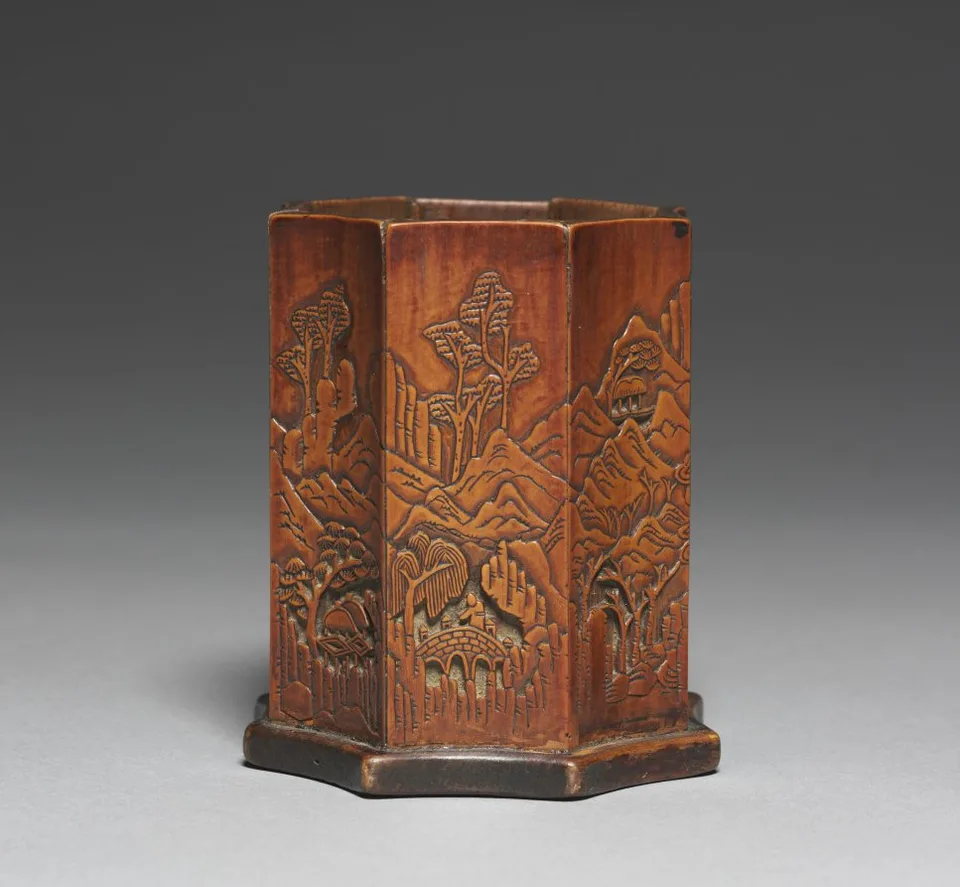
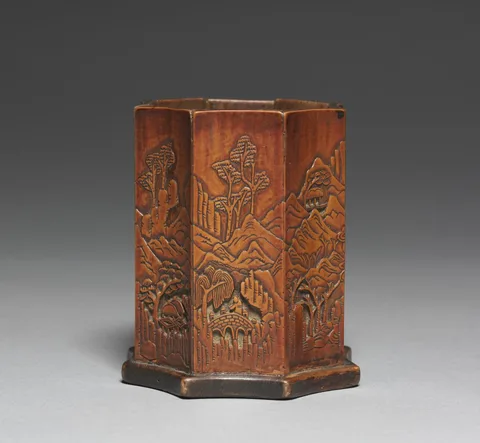
A landscape on a working container
The open top establishes use, while the carved landscape gives the desk object an aesthetic life. The museum connects such accessories with cultivated taste, without naming this holder’s original owner.
Carry this question: How does the opening change your reading of the carved landscape?
Open the artwork ↗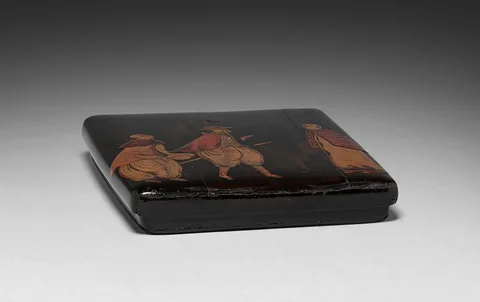
Old encounters on a later box
The fitted lid carries figures identified through their clothing. Their imagery outlived the earliest encounters it recalled, so the nineteenth-century object should not be treated as an eyewitness arrival scene.
Carry this question: Which belongs to the object’s date, and which to its inherited imagery?
Open the artwork ↗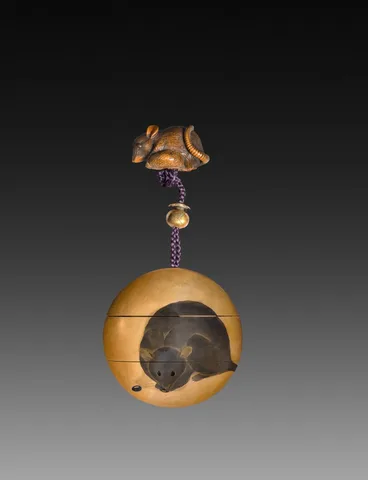
Follow the cord
Start with the mouse on the case, then follow the cord to the bag-shaped cinch and carved toggle. Functional fittings extend the same food-related theme across different materials and dimensions.
Carry this question: How does the story change when you include the fittings?
Open the artwork ↗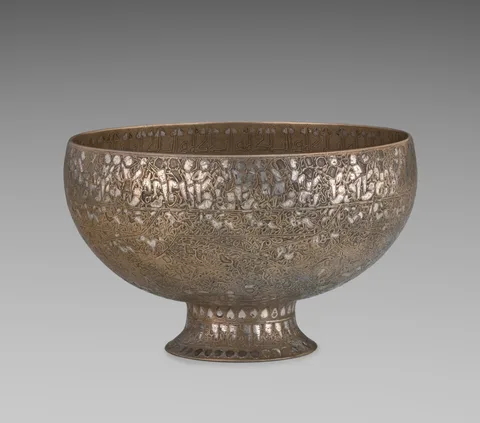
Writing becomes a moving surface
Look closely at the animated script rather than treating it as an ordinary caption. The cup gives writing a decorative and bodily presence while remaining a vessel with a distinct supporting foot.
Carry this question: Where does a letter begin to behave like a figure?
Open the artwork ↗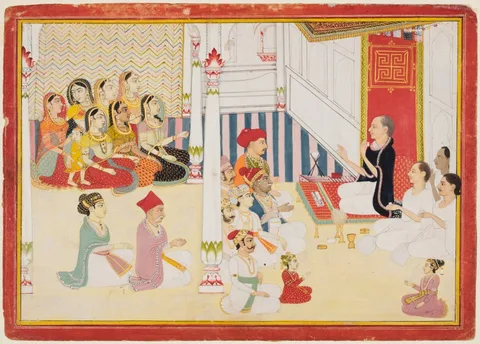
A manuscript in use
The manuscript lies before a teacher whose hand and mouth covering also matter. Here, the tool is shown within an act of instruction, so the surrounding bodily conventions shape how it is read.
Carry this question: What do the teacher’s other actions add to the presence of a book?
Open the artwork ↗Read with the sources
Historical context follows the individual museum records linked on each artwork page. These routes make original comparisons of visible form; resemblance alone is not evidence of shared meaning or direct influence.
- Brush Holder with Bamboo and Landscape Design — museum collection record
- Writing Box (Suzuribako) with Europeans — museum collection record
- Inro (Case) with Mice and Beans — museum collection record
- The Wade Cup with Animated Script — museum collection record
- Shvetambara Jain Teacher Giving Instruction — museum collection record