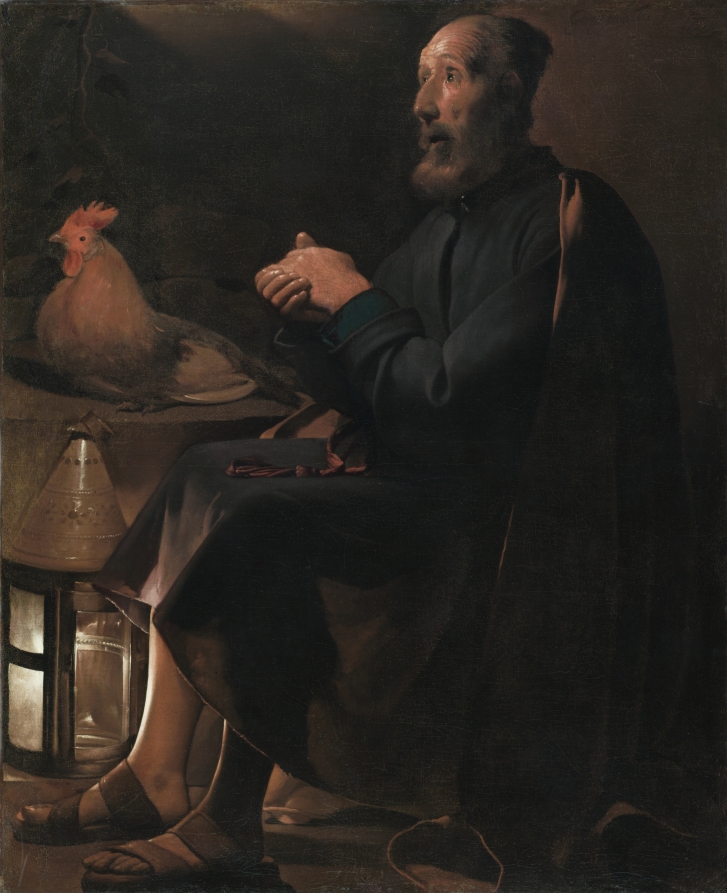
A rooster and a low lantern make an old man’s quiet vigil part of a story about denial and repentance.
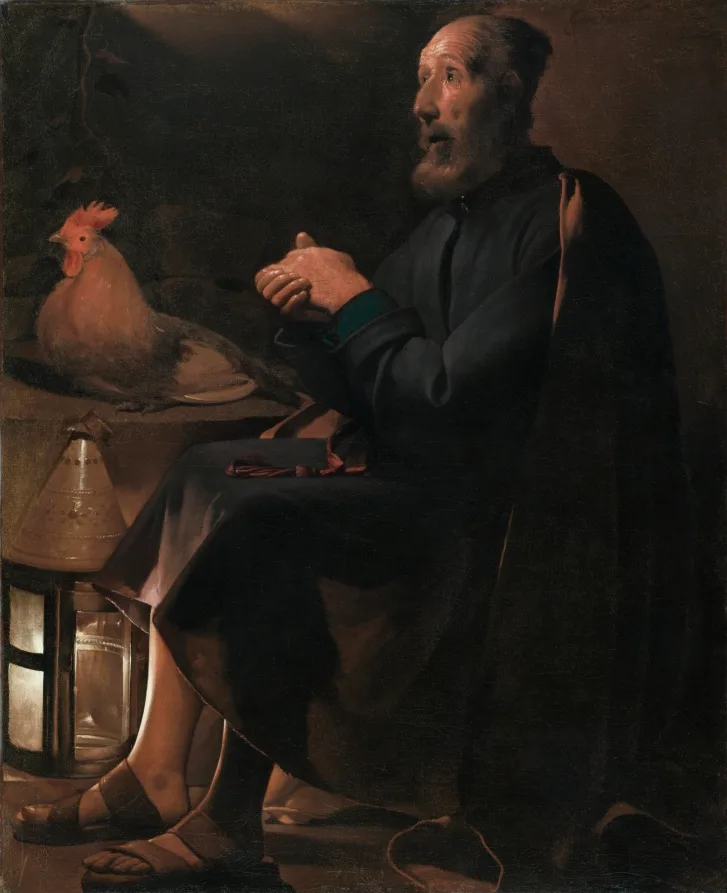
The light is low, but it does not leave the subject unreadable. Peter’s hands meet before his chest, his head lifts, and his sandals rest near a lantern. The rooster beside him seems at first an ordinary animal, yet it is essential to the religious narrative. The spare arrangement makes each of these few elements carry unusual weight.
The museum connects the image with Peter’s denial of knowing Jesus during the arrest and his subsequent repentance. The rooster recalls Christ’s prediction that Peter would deny him before it crowed. La Tour presents the apostle as an older man reflecting on that failure rather than reenacting the moment of denial itself. Muted colors and simple masses make the reflection feel sustained. Compare the bird’s warm color with the clasped hands and the lantern below: a small group of clear forms establishes a story whose main event remains outside the pictured moment, accessible through memory and attributes.
The painting’s anxious mood is an interpretation supported by pose and lighting, not a diagnosis. The museum also states that La Tour’s connection with Caravaggio is unclear; similar darkness alone does not establish a documented direct influence.