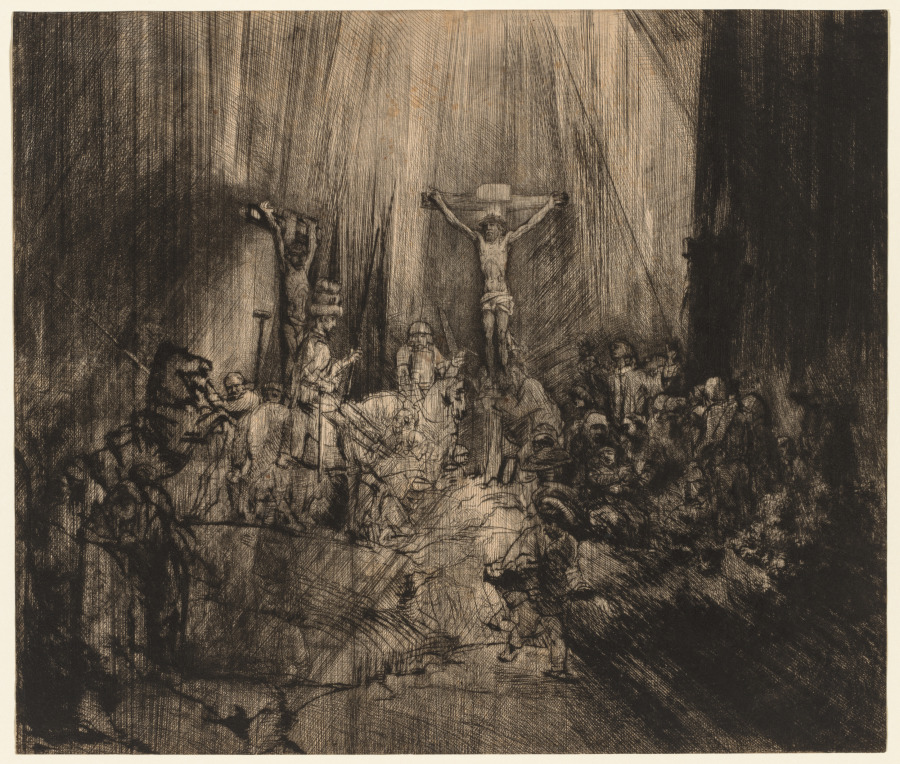
Slashing lines make darkness an active part of the Crucifixion, and this impression records a plate transformed through reworking.
The central cross is easier to locate than the crowd beneath it. Brightness opens around Christ while dense lines obscure the sides and break across the spectators. A second and third cross become harder to separate from the surrounding marks. The print makes recognition uneven: the viewer has to search through darkness rather than receiving every figure with equal clarity.
The museum identifies this as the fourth state of a drypoint plate that Rembrandt substantially reworked after earlier printing had worn its delicate lines. The changes altered the image, not merely repaired it. Additional ink deliberately left on the plate’s sides also gives this particular impression distinctive tonal effects. The religious subject and the printing process therefore meet in the visible darkness. Compare the clear center with the heavily marked edges: the scene’s drama depends on both a redesigned network of scratches and choices made when ink was wiped and the individual sheet was printed.
This is a particular impression of a reworked fourth state, not a neutral template for every print from the plate. The museum supplies that technical history; dense lines alone cannot establish the exact sequence of revisions.
Why can this impression differ from others made from the same plate?
Practise looking at Christ Crucified Between the Two Thieves: 'The Three Crosses' →