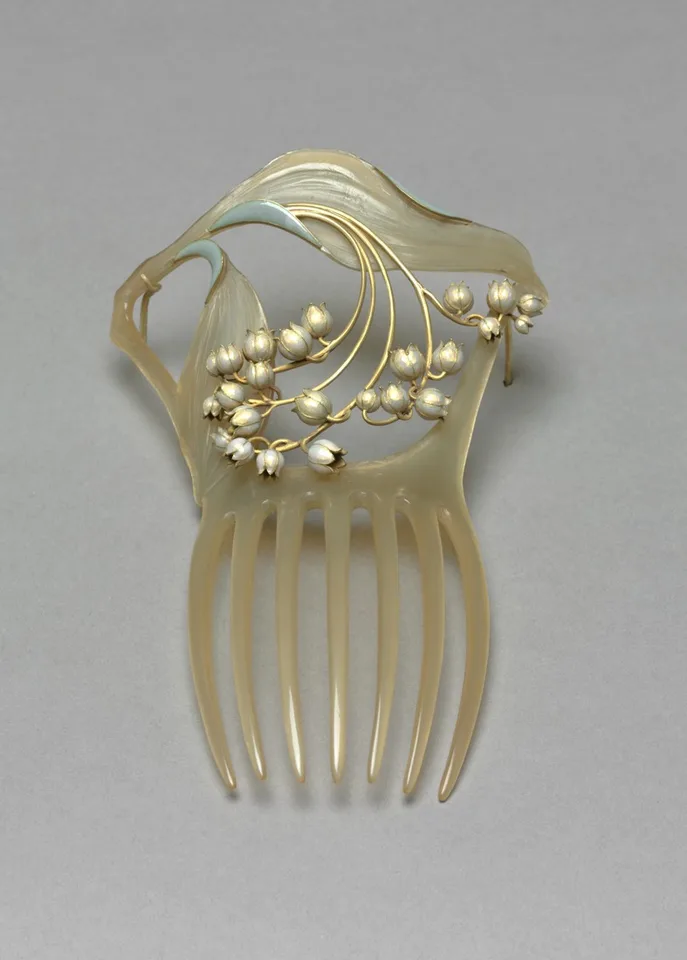
Long comb teeth continue the plant’s curves, turning a useful hair ornament into a small arrangement of leaves and bells.
The lower teeth are long and relatively plain, but their curves lead naturally into the leaf forms above. Thin gold stems sweep across open space and end in tiny pale bells. A larger translucent leaf folds along the top, making the ornament feel both airy and supported. Its decorative structure grows out of the practical form rather than sitting on an unrelated backing.
Lalique made the leaves from horn and the lily-of-the-valley flowers from enamel, combining materials with different translucency and shine. The museum records that Jeptha Homer Wade II bought the comb after admiring Lalique’s work at the 1900 Paris exposition, probably for his wife Ellen. That proposed recipient remains qualified. The object joins personal adornment with international exhibition culture, but its most immediate lesson is material: horn can suggest a supple leaf while still holding the firm shape required by a comb.
The museum gives Ellen Wade as a probable recipient, not a certainty. The photograph cannot establish how the comb looked in a particular hairstyle or how comfortable it was to wear.