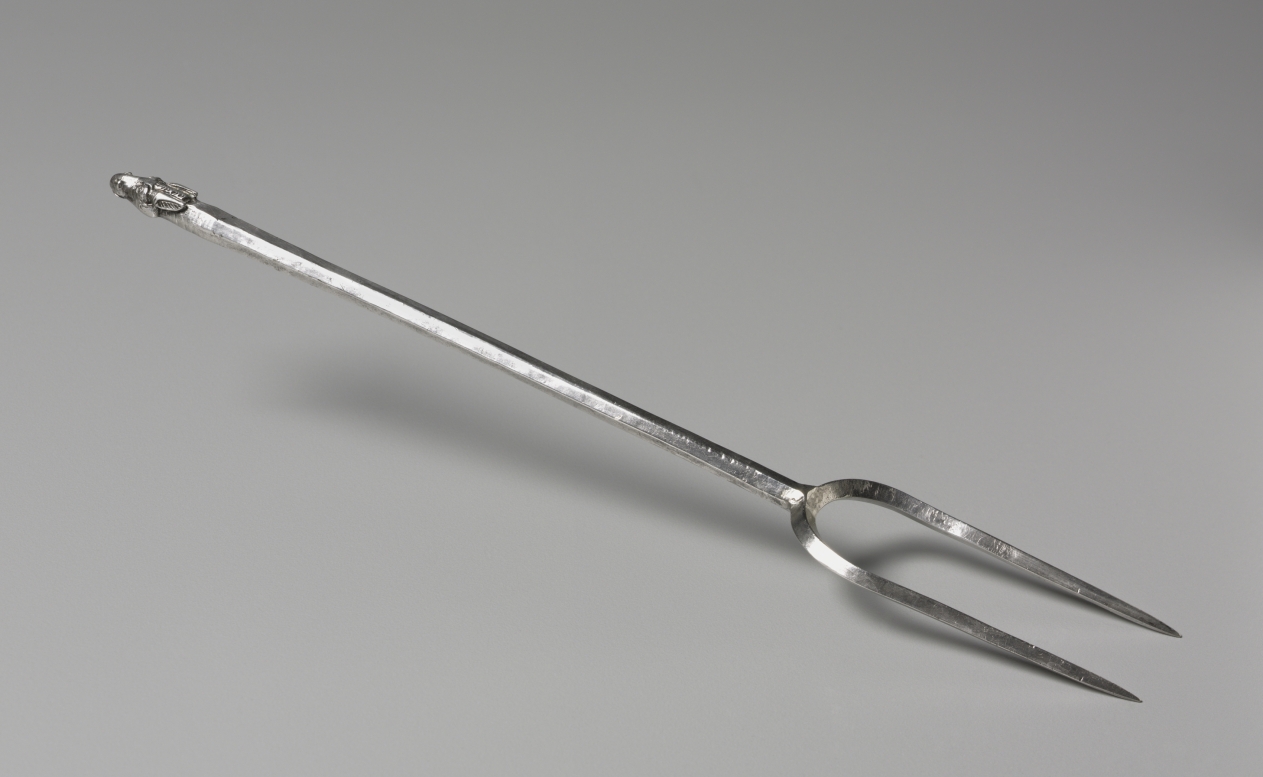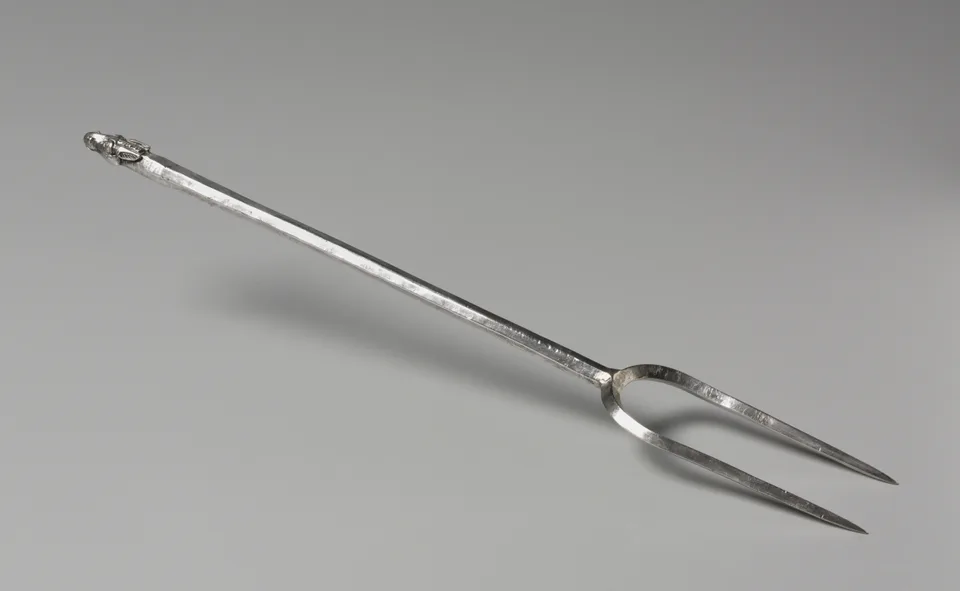
Two long tines do practical work while a tiny mule head turns the far end of the handle into an animal image.
The two ends ask for different kinds of looking. The long points make a fork's function legible immediately, while the tiny head at the opposite end requires a closer view. Between them, a faceted shaft catches light in narrow bands. A modest useful object becomes a carefully organized sequence of point, grip and miniature image.
The museum dates this silver example to late Roman antiquity and notes the relative rarity of surviving Mediterranean forks from before modern times. Its exact use—cooking, serving or eating meat—remains open. The mule head may allude to that use, but the proposed connection is not certain. The object therefore resists a simple projection of present-day table habits into the past. We can identify tines, handle and animal finial securely while leaving room for different historical ways of handling food. Its precious material adds another layer without proving the rank of a named owner.
The museum leaves cooking, serving and eating as possible uses. The mule head's relationship to meat is tentative, and the surviving fork does not establish a complete ancient table setting or personal owner.