Small forms, larger functions
Small objects can connect a picture with a function: a body supports a mirror, a bird contains liquid, a narrative occupies the back of a reflecting surface. Other forms leave their exact use unresolved. Follow connections between images and practical structures while keeping the difference between a surviving attachment and a proposed original purpose clearly in view.
Begin the journey ↓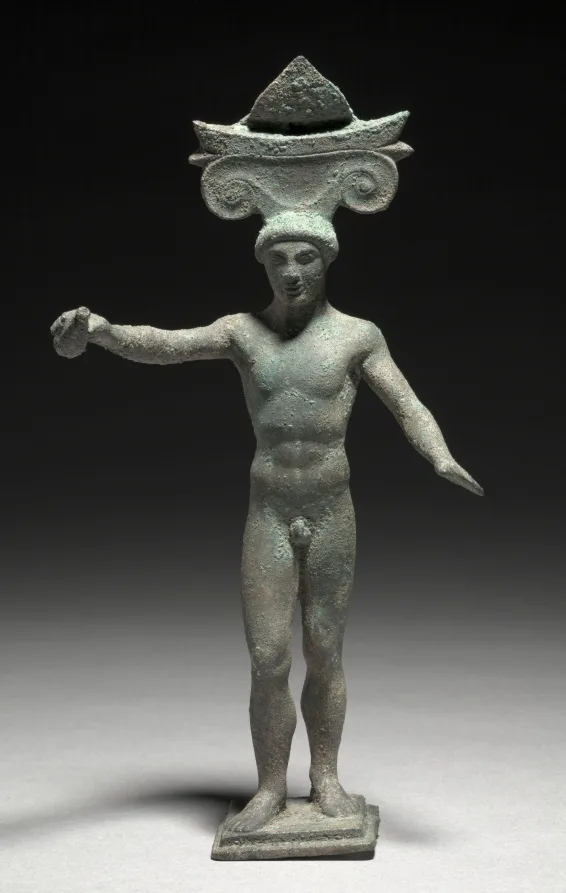
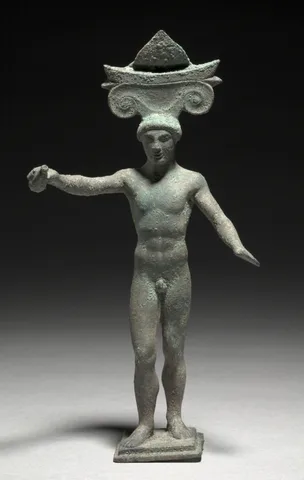
A figure below a missing disk
A triangular tang rises above curved supports on the athlete’s head. The mirror disk is missing, so the attachment clarifies the small bronze’s original role. The figure’s oil vessel and stance support a probable athletic identity to an object that also belonged to personal use.
Carry this question: Which feature most clearly shows that the surviving figure supported something else?
Open the artwork ↗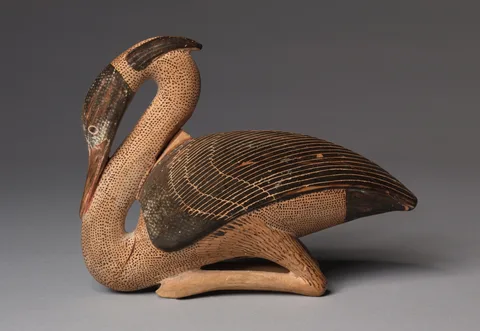
A bird redesigned as a container
The long neck folds back toward the body, making a compact silhouette. The museum identifies an oil vessel, probably made at Miletus. Its bird form and carefully incised plumage shape the experience of a container without making the clay object an anatomical study.
Carry this question: How does the folded neck keep a long-necked bird within a compact outline?
Open the artwork ↗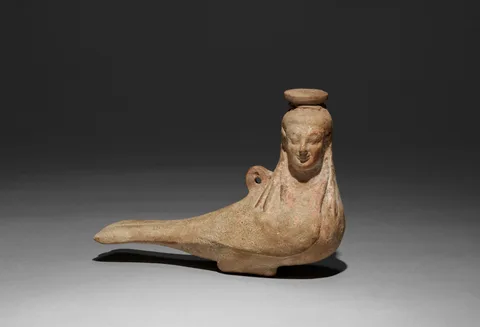
An opening above a hybrid head
The small mouth sits above a human face joined to a bird’s body. The museum identifies the hybrid as a siren and interprets the vessel as a probable perfume container. Its form combines an image with a practical opening rather than hiding that opening entirely.
Carry this question: Where does the functional mouth enter the creature’s silhouette?
Open the artwork ↗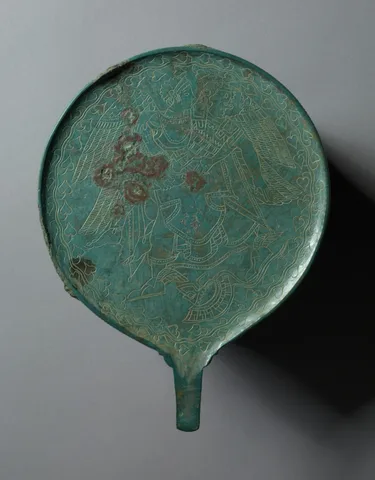
A story on the other side
An engraved helmet lies below the winged Thesan and the dead Memnun she carries. This is the decorated reverse of a bronze mirror. The image therefore occupied a surface different from the polished side used for reflection, joining personal handling with a mythological narrative.
Carry this question: How does the small helmet help establish the scene’s martial loss?
Open the artwork ↗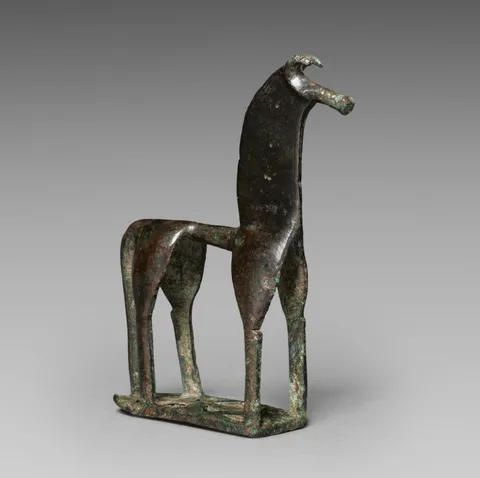
Openings are not a complete explanation
Small perforations lighten the stand below the horse’s thin legs. The museum suggests a possible watery association but leaves it uncertain. The openings’ visual effect is clearer than their symbolism, demonstrating how close looking can be precise even when interpretation remains incomplete.
Carry this question: What does the background contribute when it shows through the base?
Open the artwork ↗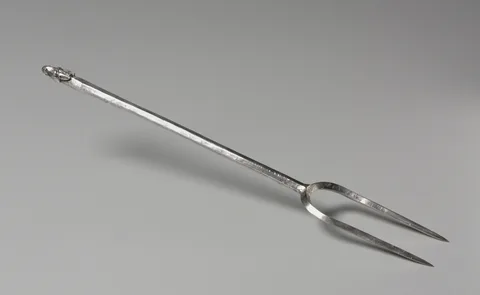
A tiny animal on a practical shaft
A mule’s head finishes the end opposite two long tines. The museum leaves open whether the fork was used for cooking, serving or eating. The finial enriches the handle, while its animal subject does not resolve that practical uncertainty.
Carry this question: Which end conveys the object’s function, and which end adds a represented creature?
Open the artwork ↗Look at a pair more closely
- Birds as containers
A heron and a siren solve different problems of shape.
- Bodies below mirrors
An Egyptian caryatid and a Greek athlete turn figures into supports.
Read with the sources
Historical context follows the individual museum records linked on each artwork page. These routes make original comparisons of visible form; resemblance alone is not evidence of shared meaning or direct influence.
- Mirror Support: Athlete — museum collection record
- Heron-Shaped Figure Vase (Oil Vessel) — museum collection record
- Siren-Shaped Perfume Flask — museum collection record
- Mirror with Engraved Scene: Thesan and Memnun (Eos and Memnon) — museum collection record
- Statuette of a Horse — museum collection record
- Fork with Mule-Head Finial — museum collection record