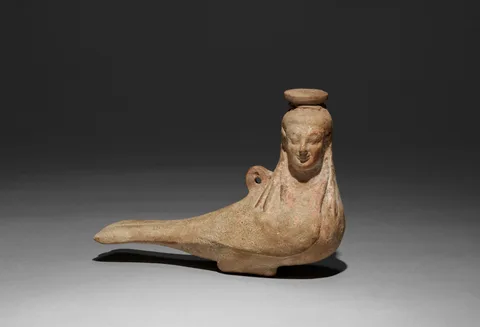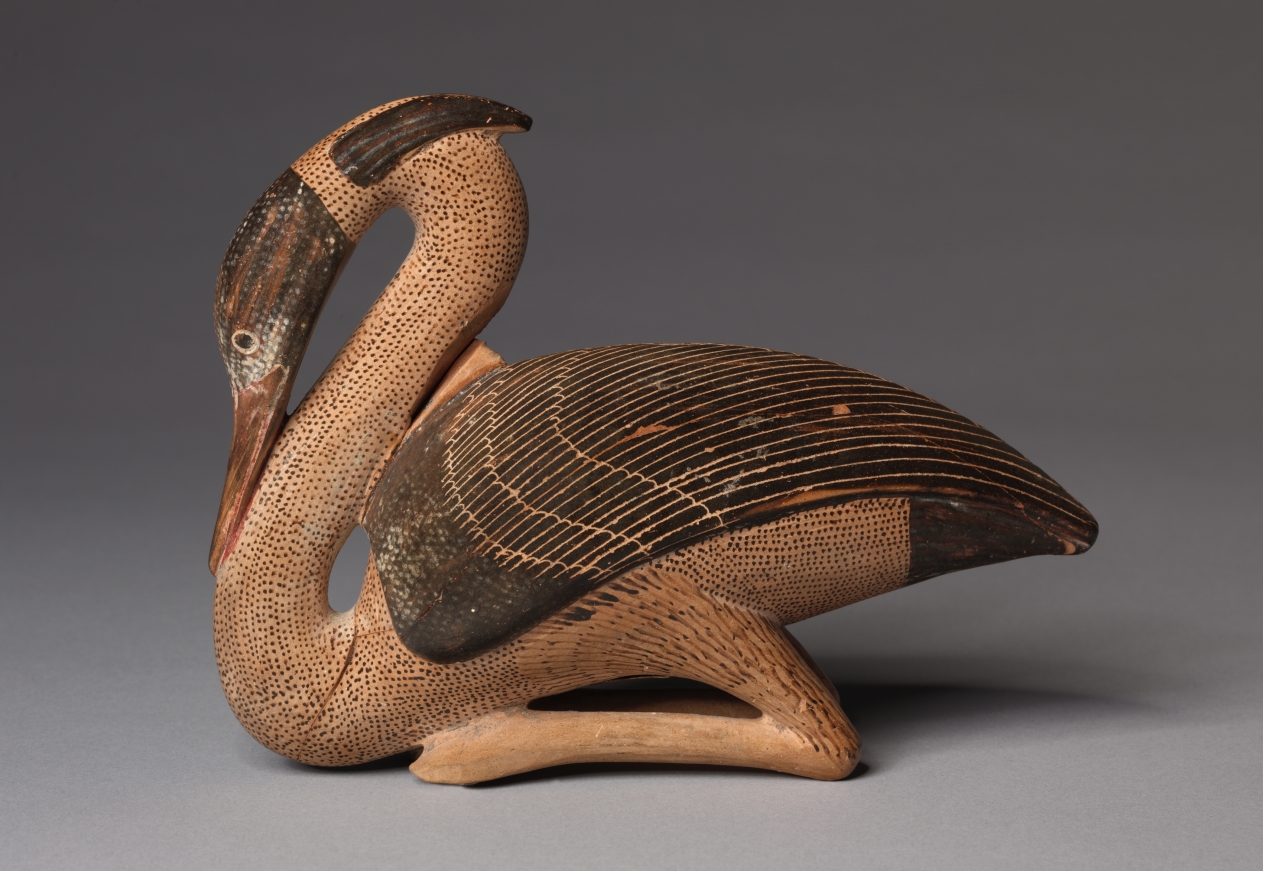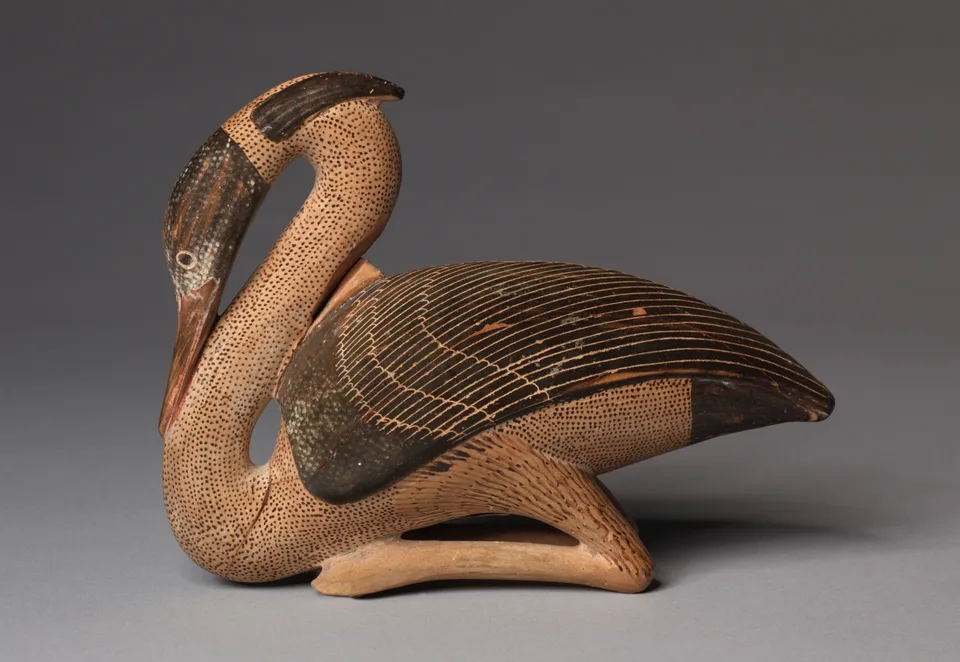
A long neck folds almost to the ground, turning the recognizable heron into a compact vessel covered with tiny patterned marks.
The bird's neck makes an elegant countercurve to its rounded body. Its long beak descends toward the base, while folded legs keep the silhouette compact. The artist has selected a resting position that fits the needs of a small container rather than attempting to reproduce a heron in flight. Body and function are designed together.
The museum identifies an oil vessel, or aryballos, probably made in a Milesian setting in the sixth century BCE. Similar small animal-shaped containers held scented oil across several eastern Greek centers. Incised lines and dark slip distinguish feathers from the dotted body, making surface technique part of animal description. The photograph lets us inspect these patterns but does not show every opening or interior space. The container's recorded use therefore complements what the bird's shape reveals. An attractive natural form can carry a practical substance without requiring an invented symbolic explanation for every feather.
The Milesian attribution is qualified in the catalogue. The vessel's oil-container function is documented, while the precise contents and use history of this individual example are not recoverable from the photograph.