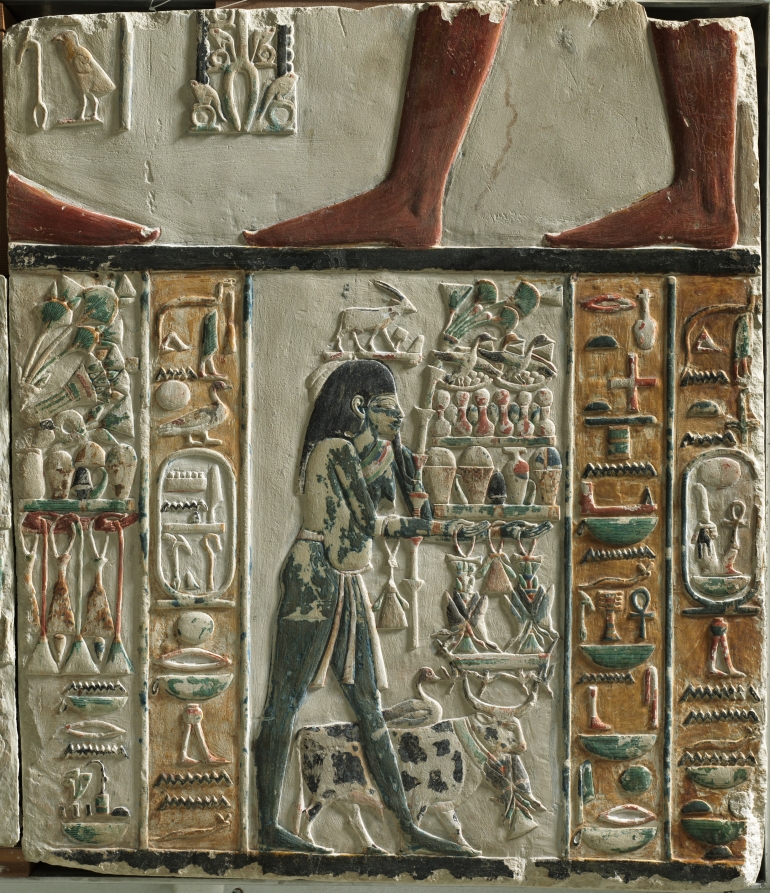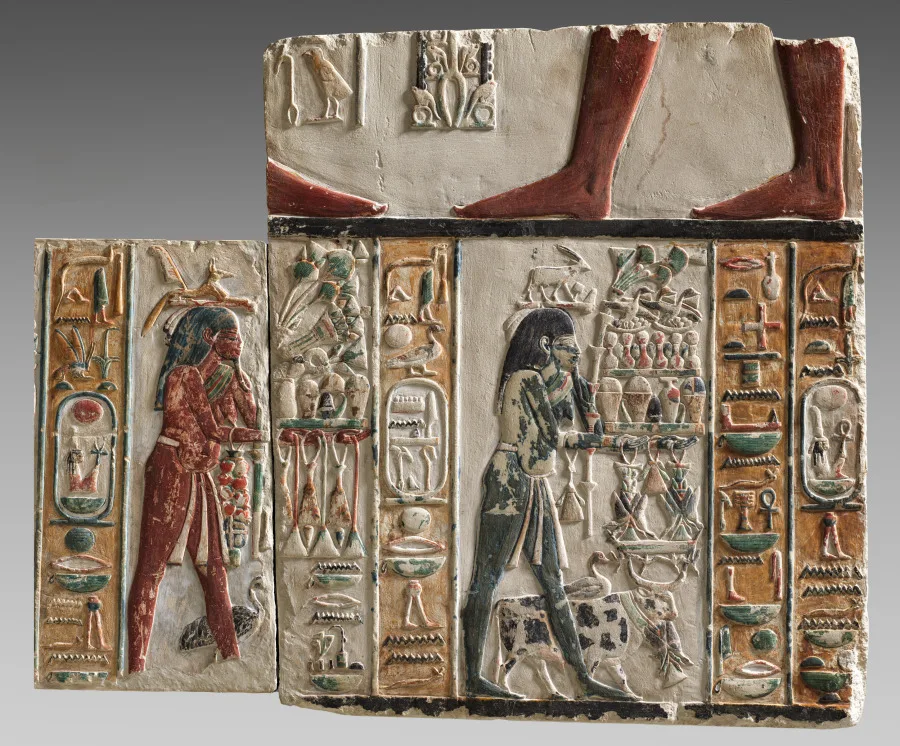
Small offering bearers and enormous feet share a wall: scale and horizontal bands organize a temple’s sacred exchange.
Read this fragment in two directions. Along the lower band, figures move with loaded trays among columns of hieroglyphs. Above them, a few enormous feet and lower legs survive from another scene. The image therefore preserves different levels of a temple wall rather than one ordinary event viewed at a consistent scale.
The museum relates these blocks to a larger procession of four personified Egyptian provinces, or nomes. Only two offering bearers are visible in this photograph. Their gifts represent the productive land being presented in the name of Amenhotep III to a deity above. Emblems on the heads distinguished provinces, while the inscriptions specified offerings and royal claims. The blocks may have come from a temple at ancient Hebenu. Later dismantling and reuse may help explain why so much color survived. Reading the broken margins is as useful as reading the figures: they show where the original visual argument continues beyond this fragment.
The museum describes a larger four-figure ensemble; this selected view contains two bearers. The proposed temple location and explanation for the paint’s survival remain qualified in the source.