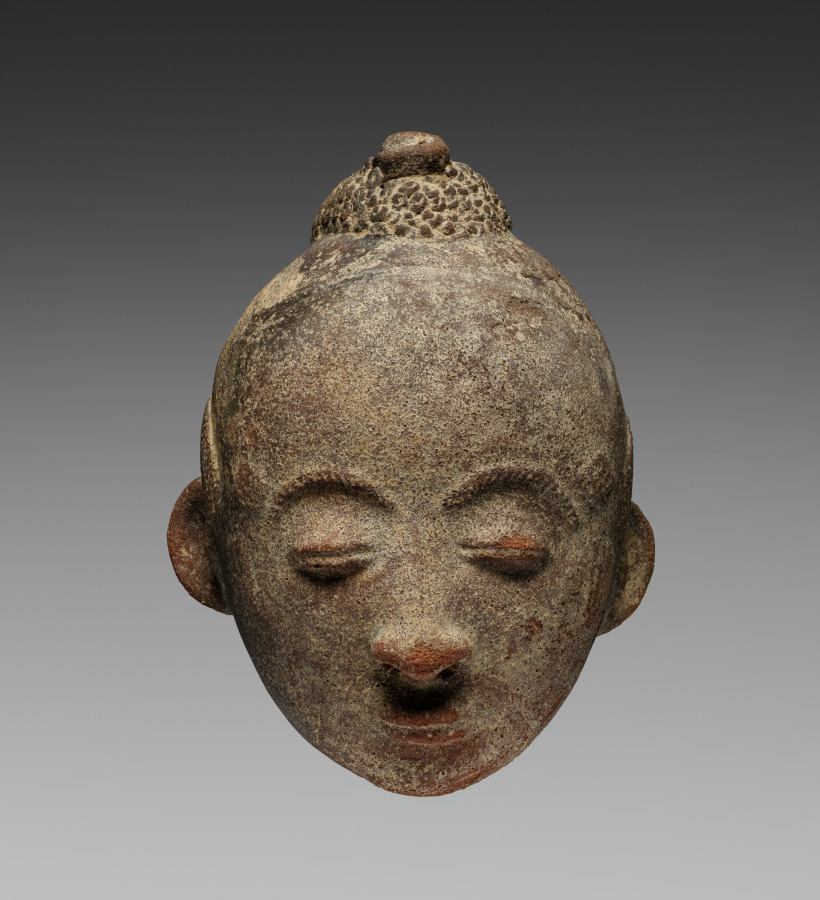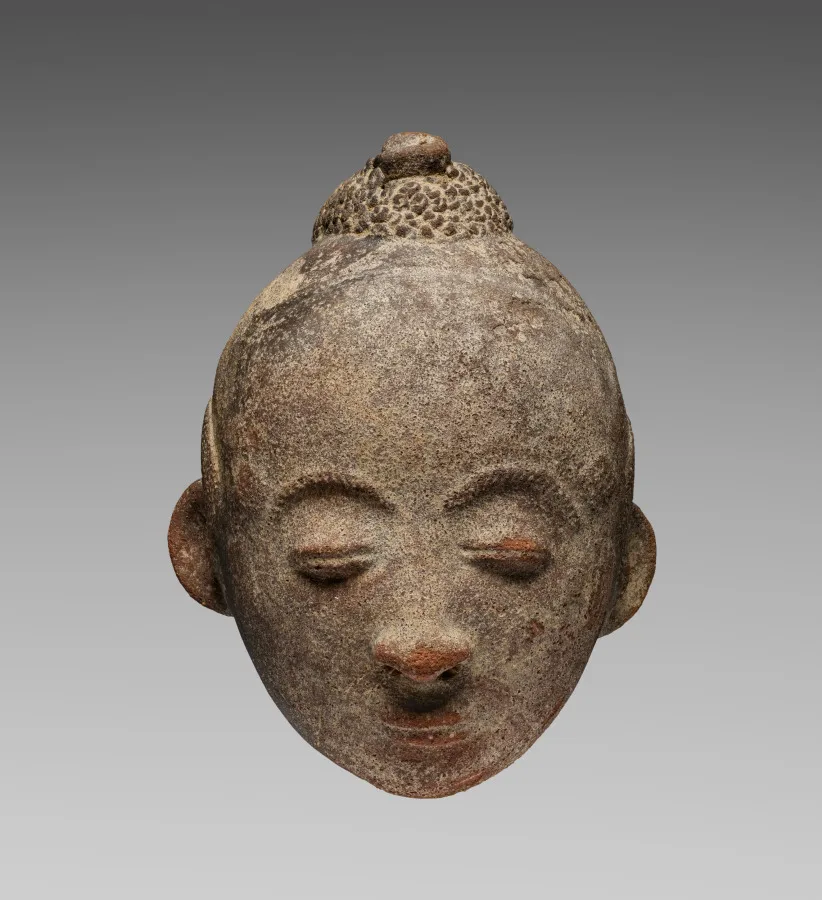
A distinctive hairstyle and a composed face show how a memorial portrait can combine individual memory with an ideal.
This face does not need a dramatic expression to make an impression. Its broad forehead, lowered eyelids and closed mouth create a remarkable stillness. Above them, the small repeated textures of the hair culminate in a prominent knot. The difference between those lively textures and the quiet face invites a slower kind of looking.
The museum identifies the sculpture as an idealized memorial portrait of an Akan royal, made by an unrecorded woman ceramicist. Royal families commissioned such portraits during a person's lifetime; after death and burial, the images could be placed in a sacred grove. According to the collection record, the sculptor worked from memory. Individual details such as hairstyle existed alongside desired qualities of elite conduct. The calm expression is therefore not straightforward evidence that the sitter happened to feel peaceful. It belongs to an ideal of self-command that the portrait presents to others.
The sitter’s name and the artist’s name are not recorded here. A memorial likeness can preserve selected personal traits without being a literal record of the person’s expression or appearance at one moment.