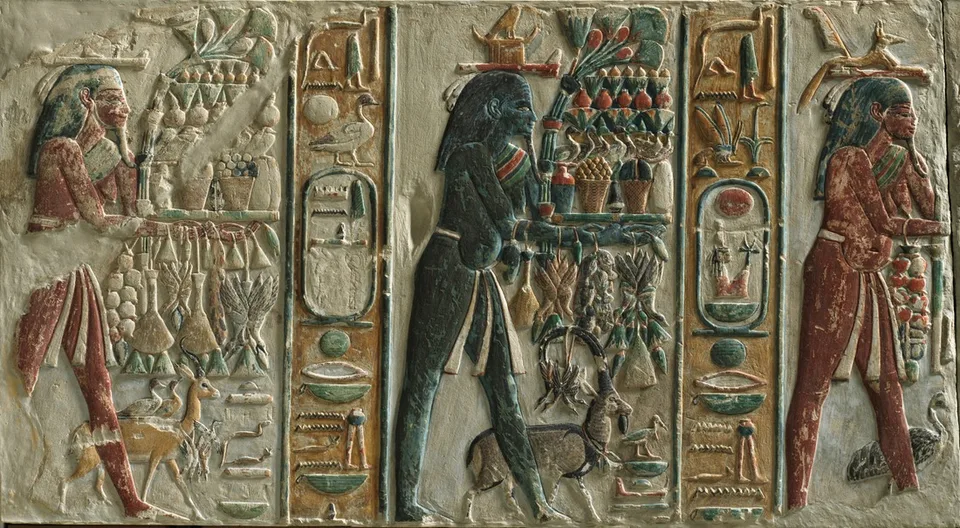
Offerings pile above and below long trays, turning a procession of painted figures into an image of the land’s abundance.
The museum identifies these temple-wall figures as personifications of nomes, the provinces of ancient Egypt. They bring the land’s abundance as trays of offerings and sacrificial animals to a deity in an upper register, where the king Amenhotep III also appeared. That larger arrangement no longer fits within this photograph. The present view shows three figures or portions of figures from a record describing four, so the surviving image should not be treated as the whole procession.
The relief creates abundance through crowded vertical layers. Above each tray rise plants and stacked shapes; below it hang further produce and appear small animals. Narrow columns of signs separate the figures while repeating the wall’s upward movement. Surviving red and green-blue colour helps distinguish bodies and objects, reminding us that the carved limestone was painted. The blocks may have come from Amenhotep III’s temple dedicated to Horus, but that proposed location remains qualified. The orderly visual procession is clearer than its precise original architectural setting.
The museum proposes rather than confirms the Horus-temple origin. The photographed blocks omit the upper register and show only part of the four-figure group described in the record.