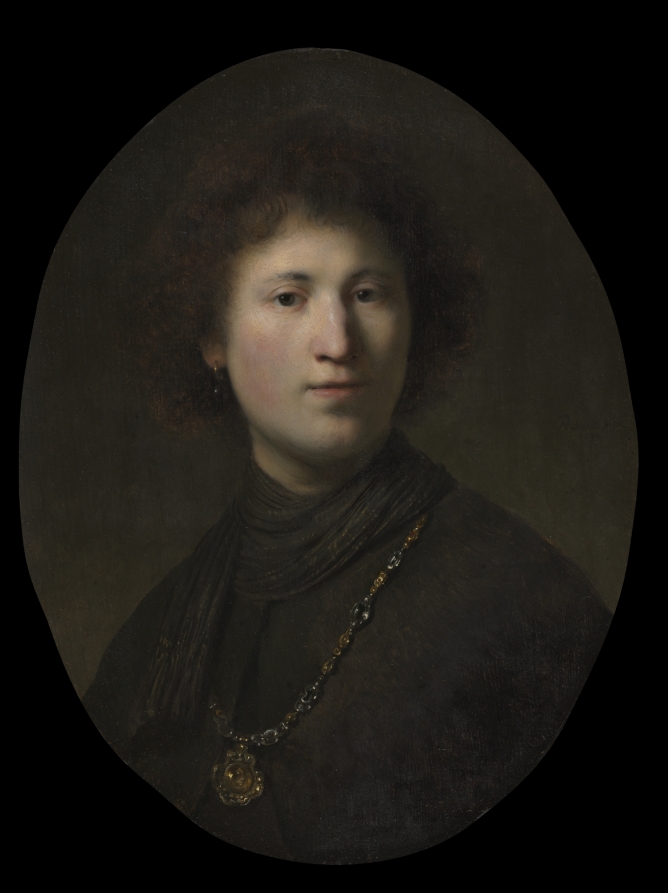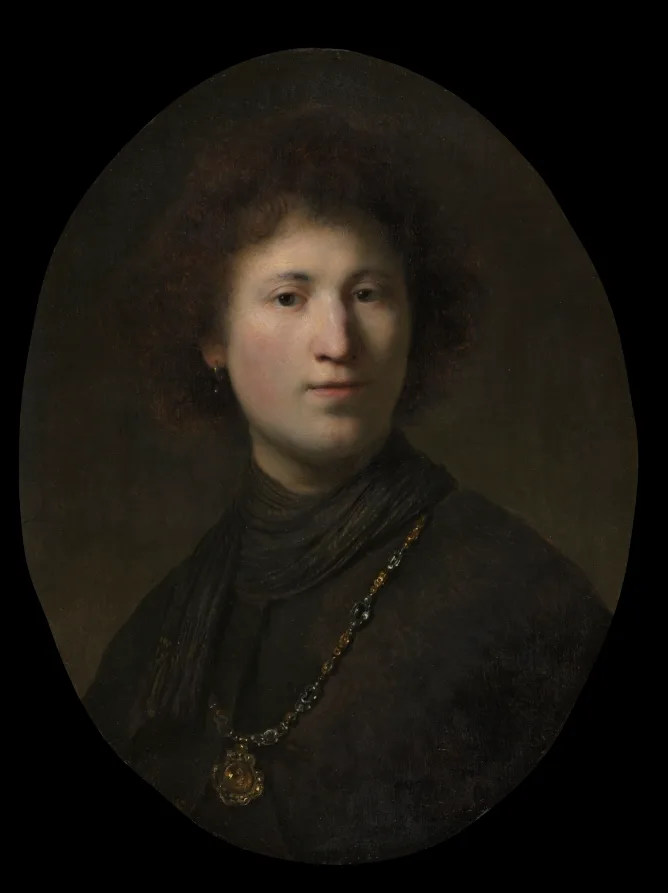
A glittering chain and carefully lit face invite attention, while both the sitter’s identity and the authorship remain qualified.
The face emerges gradually from a dark oval. Light defines one cheek and the bridge of the nose, while curly hair softens the upper outline. A striped scarf and jeweled chain add texture without creating a fully described setting. These accessories help make the head an experiment in appearance rather than a straightforward record of a named person.
The museum classifies the work as a tronie, a study of a head or facial expression that was not intended as an identifiable commissioned portrait. Its current attribution is to Rembrandt and Studio, and the text notes continuing disagreement despite the presence of a monogram. Some scholars have proposed his pupil and associate Isaac de Joudreville. That uncertainty is part of the work’s history, not an inconvenience to hide. Compare the face’s lighting with the pendant’s small highlights: both demonstrate controlled attention to surfaces, regardless of whether a single secure author can be assigned.
Retain the museum’s Rembrandt and Studio attribution and its discussion of disputed authorship. The sitter is anonymous; an earlier self-portrait identification is no longer accepted by the museum, and a monogram alone does not settle who painted the work.