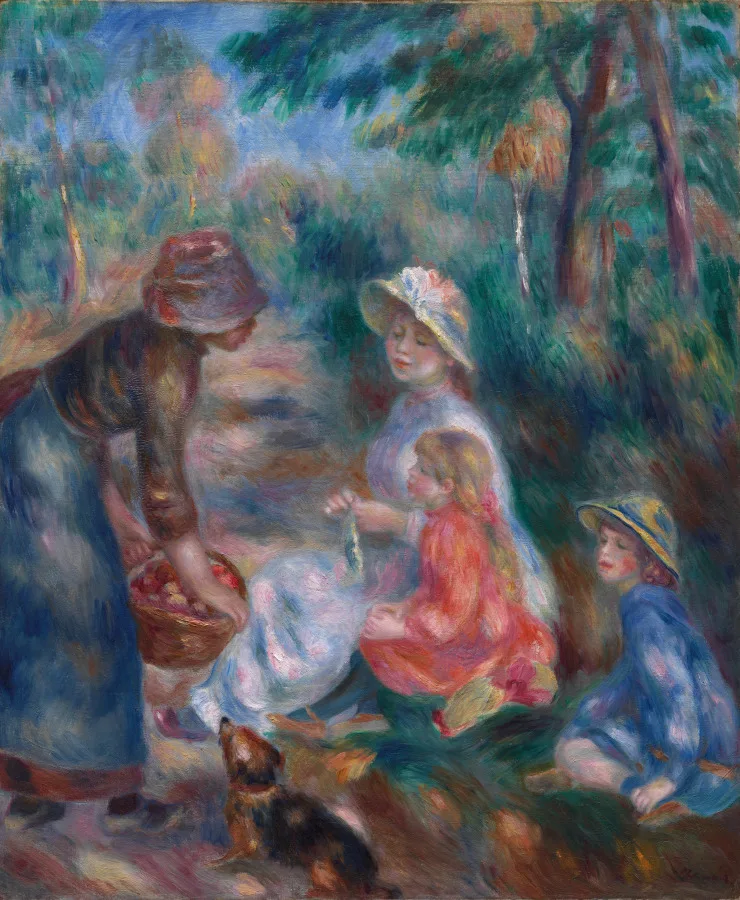
A basket of apples connects the figures, while a small jumping dog interrupts the scene’s gentle rhythm.
The apples provide a reason for these people to gather. A young seller bends forward at the left, while a seated woman extends a hand toward her. Two children complete the group, and the dog adds a small burst of movement below. Renoir uses similarly soft, repeated strokes across clothing and landscape, so the figures seem immersed in the same shifting outdoor light.
The museum identifies the seated adult as Renoir’s wife, Aline. It suggests that the boy may be his nephew Edmond, while leaving the other child unidentified. Those different levels of certainty matter: a family connection does not provide names for everyone. The picture was probably completed at Essoyes in eastern France. Look first at the exchange around the basket, then at the dog and the patches of light. A simple transaction becomes an arrangement of attention, movement, and color rather than a detailed account of agricultural labor.
The boy’s identification and the Essoyes location are probable rather than certain. The other child remains unidentified, and the painting’s inviting light should not be mistaken for a complete account of rural working conditions.