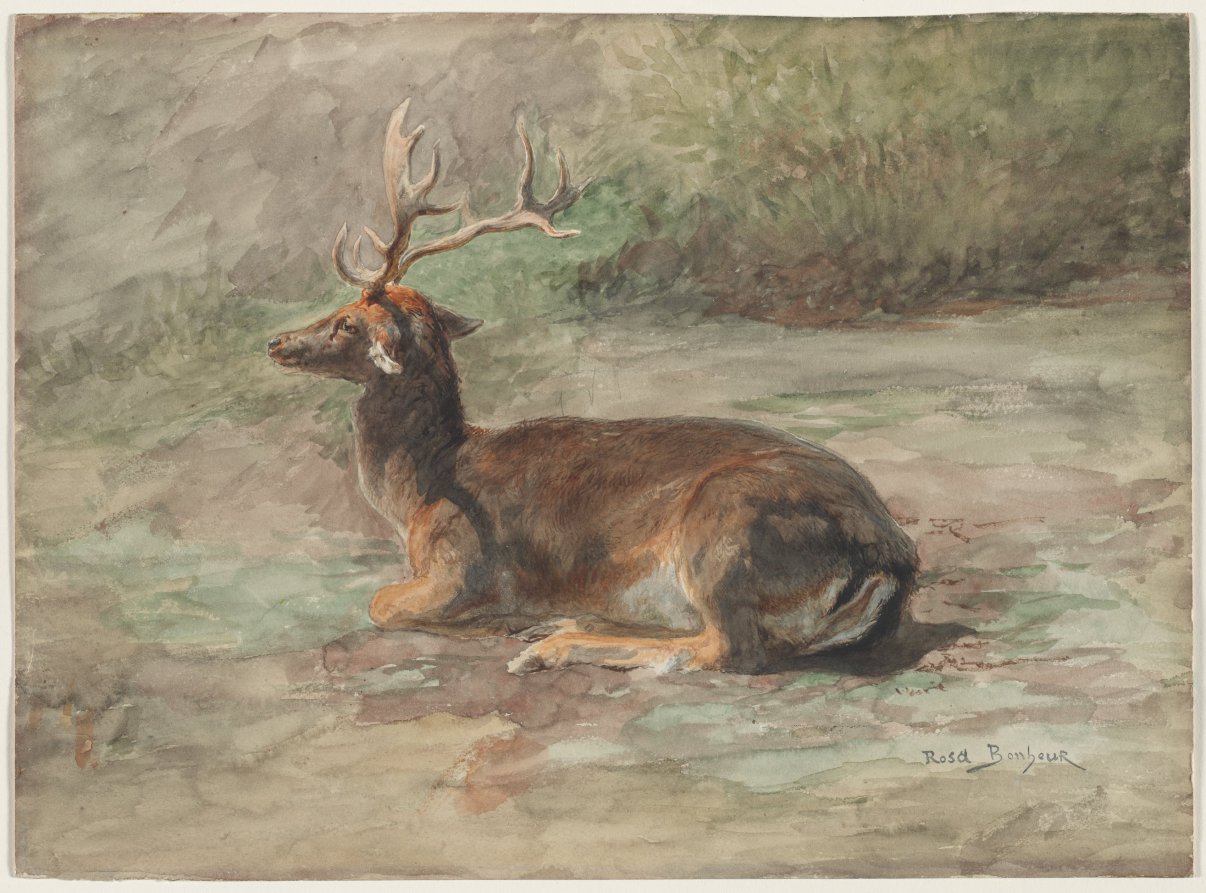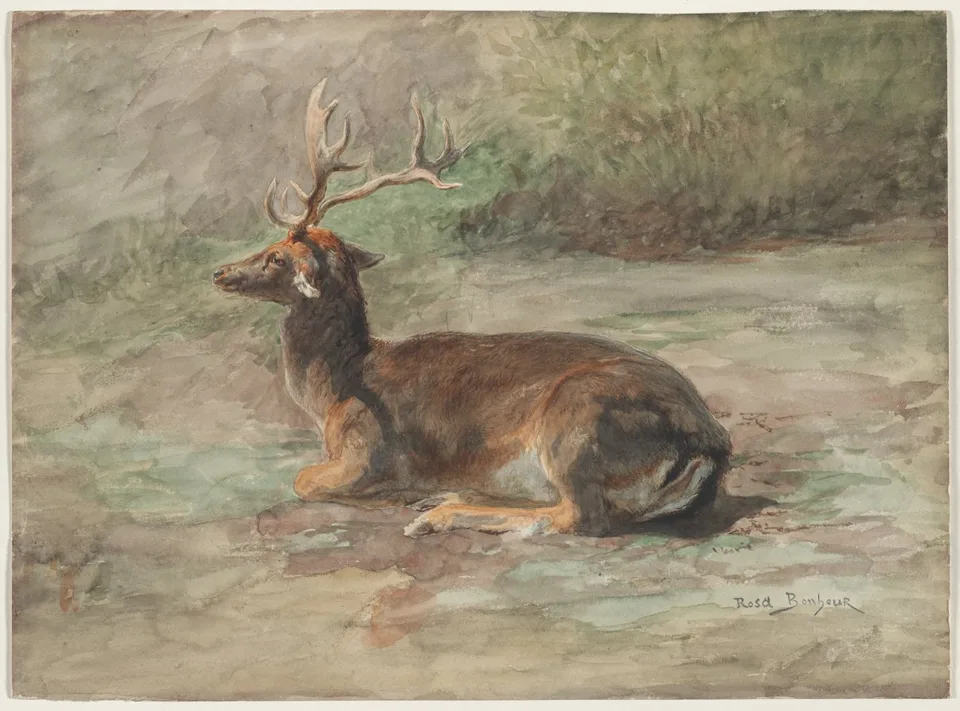
The resting stag stays sharply present while its surroundings dissolve, showing how an animal study can choose where to spend its detail.
The body rests low, but the raised head and branching antlers give the animal a clear upward presence. Bonheur describes the stag more firmly than the surrounding woodland, using soft washes for ground and vegetation. The difference helps us locate the animal without requiring a detailed map of its environment. Light touches across the coat make the rounded form readable while preserving the looseness of a study.
The museum relates the work to Bonheur’s excursions near her home, where she sketched animals outdoors. Her companion recalled a motionless stag with sunlight moving through the leaves, an account that helps explain the circumstances but is not a measurement of the exact light seen here. The drawing combines watercolor, gouache, and graphite. These materials allow transparent areas, more opaque accents, and fine structural marks to coexist. Follow the body’s outline, then the less definite edges of the setting: selective finish organizes our attention rather than reducing the work’s interest.
A companion’s recollection supplies context for the study; the image alone cannot establish a precise moment or location. The museum also mentions Bonheur’s pet stag, but does not identify this animal as that particular model.