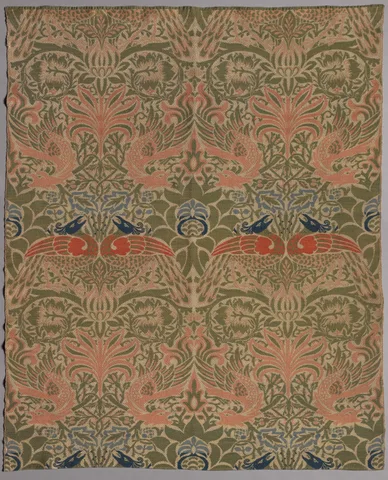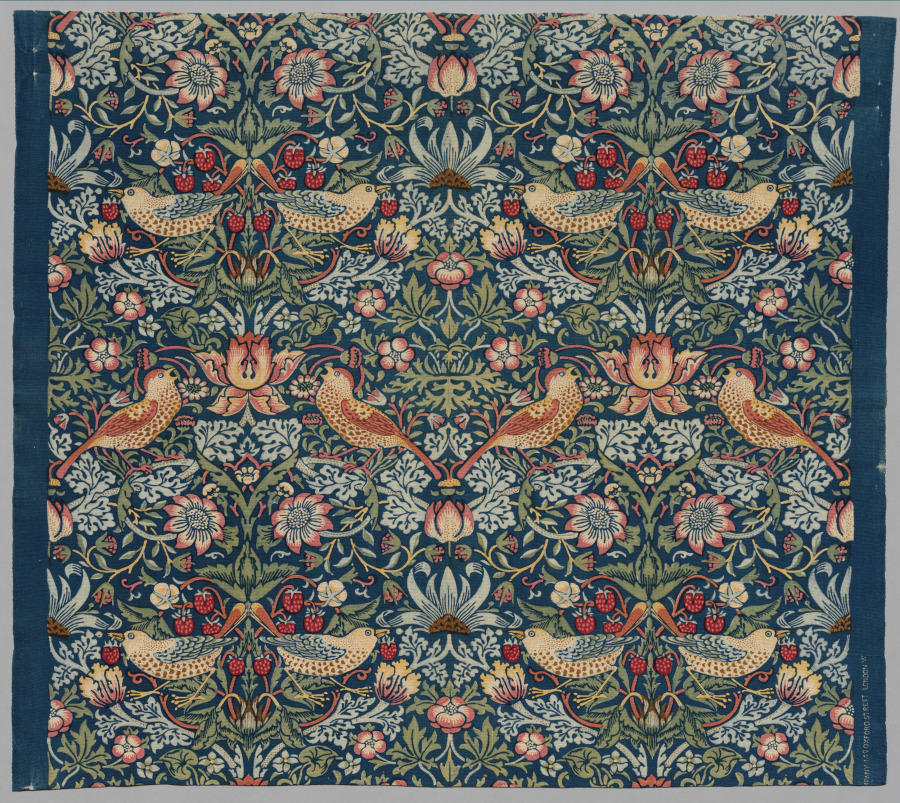
Garden birds become a repeating pattern, while the date belongs to this later textile rather than to Morris’s lifetime.
The birds are easy to recognize, but finding the repeat takes a little longer. Paired bodies turn in opposite directions amid strawberries, flowers, and curling stems. The dark blue ground keeps the many pale and warm-colored shapes distinct. Nature has been reorganized into a surface that can continue beyond the edges of this particular piece of cloth.
The museum connects Morris’s design with thrushes taking fruit from the garden at Kelmscott Manor. It also explains the indigo-discharge process: cloth was dyed blue, selected areas were bleached, and additional colors were block printed. That sequence makes the background an early material condition rather than simply the last empty area filled. This surviving textile is dated around 1936, after Morris’s death, so his role is design rather than personal manufacture of this piece. Compare a bird with its repeated counterpart: an anecdote about living animals becomes a reproducible arrangement shaped by both observation and a demanding printing process.
The museum dates this textile to about 1936 and credits Morris as designer. Do not imply that he personally printed this later piece. The garden story explains the design’s inspiration, not a literal record of every bird and plant shown.