A skull and an open book changed how this painting was identified: one expression was never enough to settle the subject.
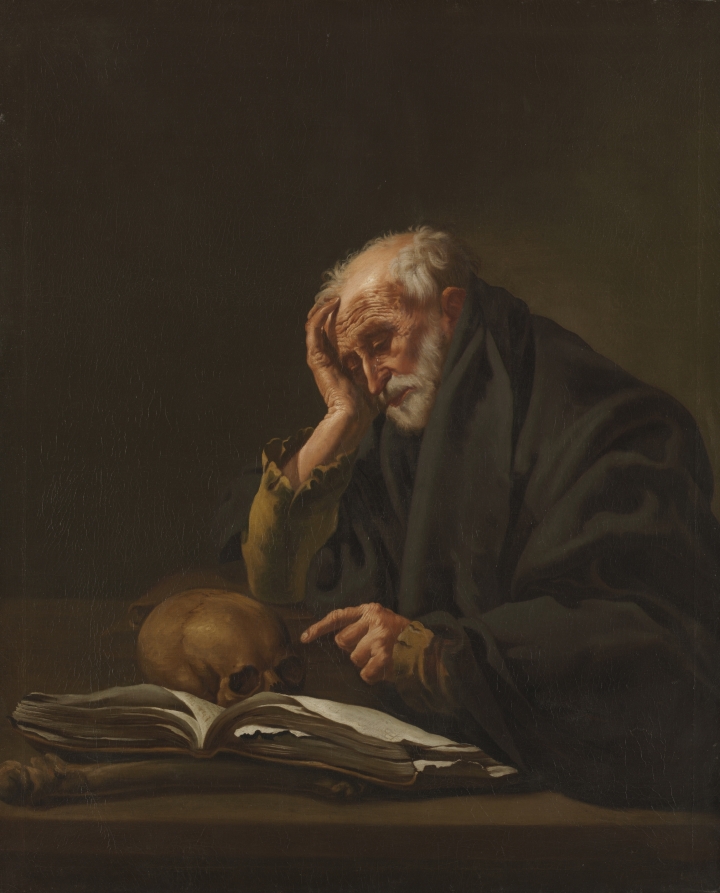
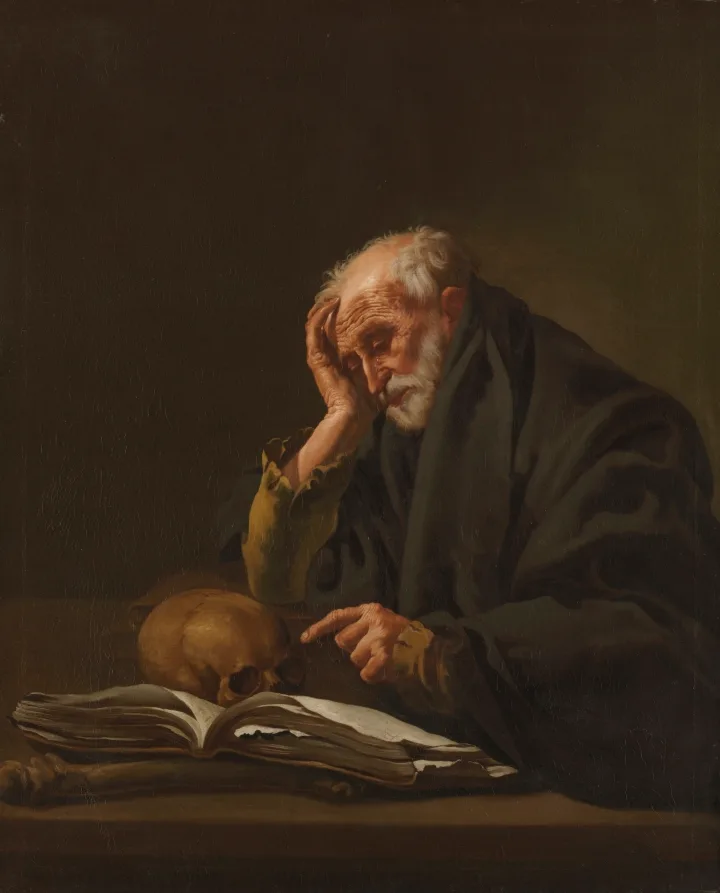
The man’s face is troubled, his brow supported by one hand. It is tempting to begin and end with that expression. Yet the museum once identified this figure as the weeping philosopher Heraclitus and later reconsidered the subject. The missing globe that normally helps identify Heraclitus, together with the book and skull that are present, led to the current identification as Saint Jerome, known for translating the Bible into Latin.
This is a useful lesson in reading images as combinations of evidence. The skull and book are not a magical code that always gives the same answer, and tears do not belong to just one historical figure. Context, expected attributes, and the painting’s particular arrangement all matter. Follow the pointing finger toward the table: it makes the objects part of the man’s attention rather than simple background furnishings. The museum proposes that his tears intensify a penitential mood, while acknowledging this as a likely artistic intention rather than a directly recorded fact.
The museum’s changed identification is evidence that interpretation can be revised. Skull, book, and tears should be considered together and within a tradition; none supplies a universally reliable name on its own.