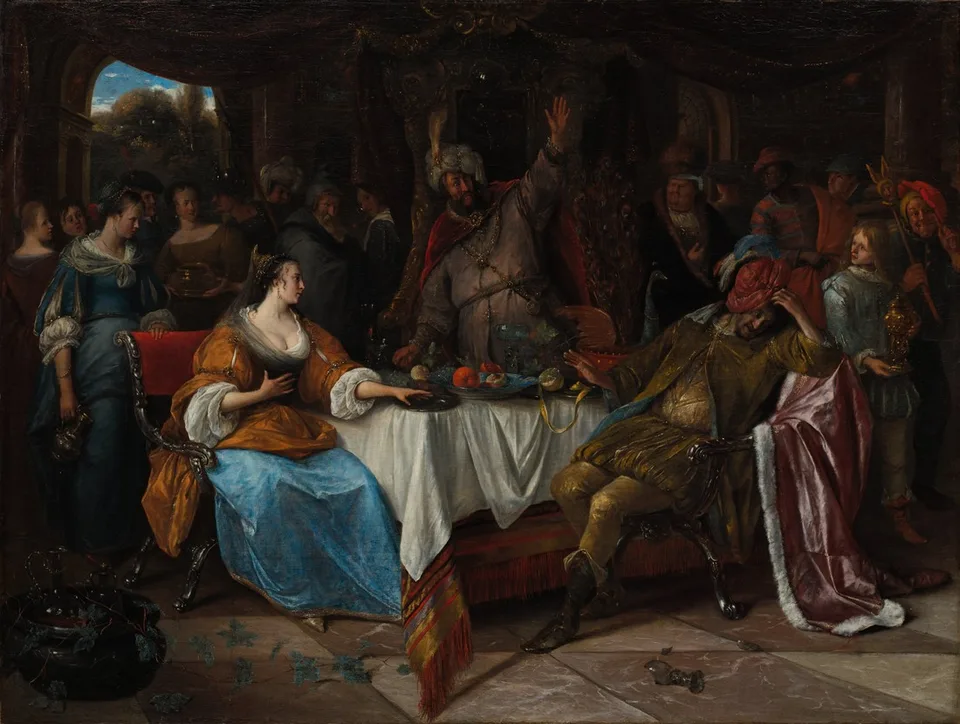
An open hand, a raised arm, and a slumped body make a reversal of power visible around one banquet table.
The table connects three principal figures while their gestures pull in different directions. Esther sits upright at the left, opening one hand toward the right. Ahasuerus rises behind the meal with his arm raised. Haman sinks into his seat, his lavish clothes no longer providing an appearance of command. The surrounding attendants make the confrontation public without displacing its three central actors.
The museum identifies the story from the Book of Esther. Esther reveals the danger posed by Haman’s plan to destroy the kingdom’s Jews and persuades her husband, the Persian king, to reverse it. The narrative gives the gestures their specific stakes: a threatened community and a minister’s sudden loss of power. Steen clothes the event in rich color and theatrical movement, but the painting should not be used as evidence for ancient Persian interiors or dress. It is a later European interpretation of a biblical account.
The painting interprets a biblical narrative through seventeenth-century European pictorial conventions. Its costumes and furnishings do not document the material appearance of the ancient Persian court.