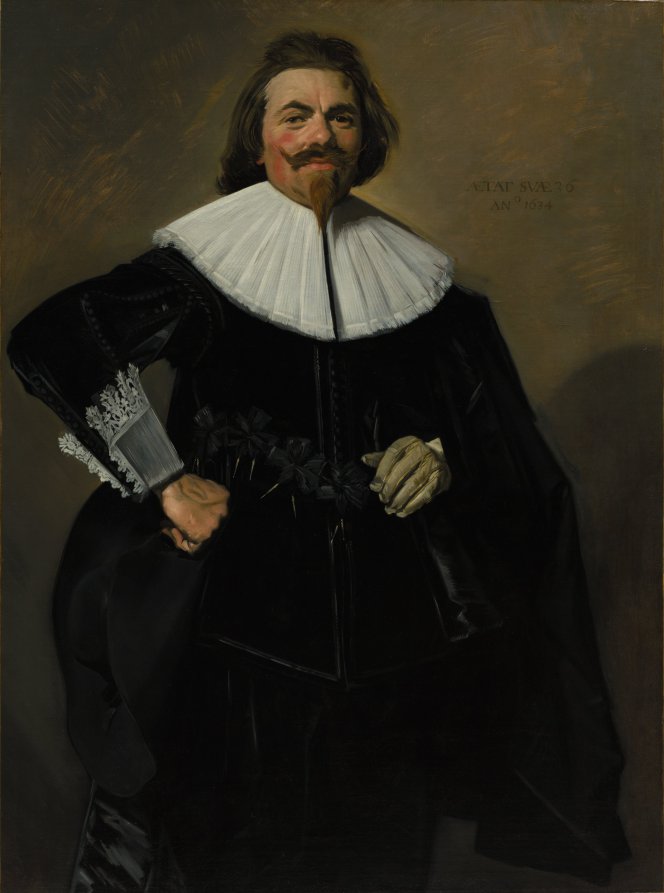
Black clothing is anything but plain when you look at the collar, cuffs, ribbons, and self-assured pose.
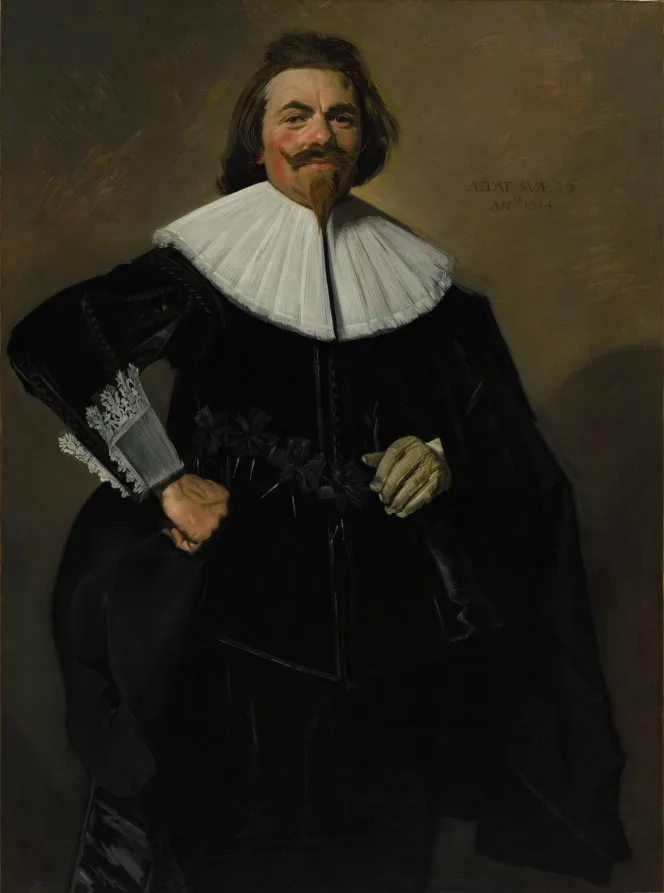
Roosterman’s black suit might look restrained from a distance. Look closer and restraint becomes a display of carefully chosen materials: a broad white linen collar, lace-edged cuffs, braid, buttons, and decorative ribbons. The sitter was a wealthy linen and silk merchant in Haarlem. The museum therefore relates his fashionable clothing to a profession that depended on assessing and selling fine cloth.
His hand-on-hip stance pushes one elbow outward and gives the silhouette an assertive shape. At the same time, visible brushwork keeps the image from feeling mechanically polished. Hals does not need to describe every thread evenly to make the fabric persuasive; brisk light and dark marks carry much of the effect. Try moving between the whole figure and a cuff. The painting presents both a person with social confidence and a painter whose handling of the surface makes that confidence feel lively, while leaving the sitter’s private character beyond our reach.
The portrait also has a documented history of dispossession. The museum’s provenance records it in Nazi possession from 1938, after its ownership by the Rothschild family. It was recovered after the war, displayed in Vienna and restituted to the Rothschild heirs in 1999, before the sale through which Cleveland acquired it. That history concerns the movement and ownership of this particular painting; it cannot be learned from the sitter’s confident pose.
The pose and clothing construct a public image. They do not prove that Roosterman always behaved confidently or tell us his private character; the possible wedding connection remains qualified in the museum record.