Images and materials in transit
Objects and designs move through copying, trade, collecting, and technical adaptation. These four examples preserve different kinds of transmission: a drawing after another culture’s image, a close replica in a new material, a factory’s response to imported ceramics, and a later imitation of an established pattern. Compare what remains recognizable and what the new maker or material changes.
Begin the journey ↓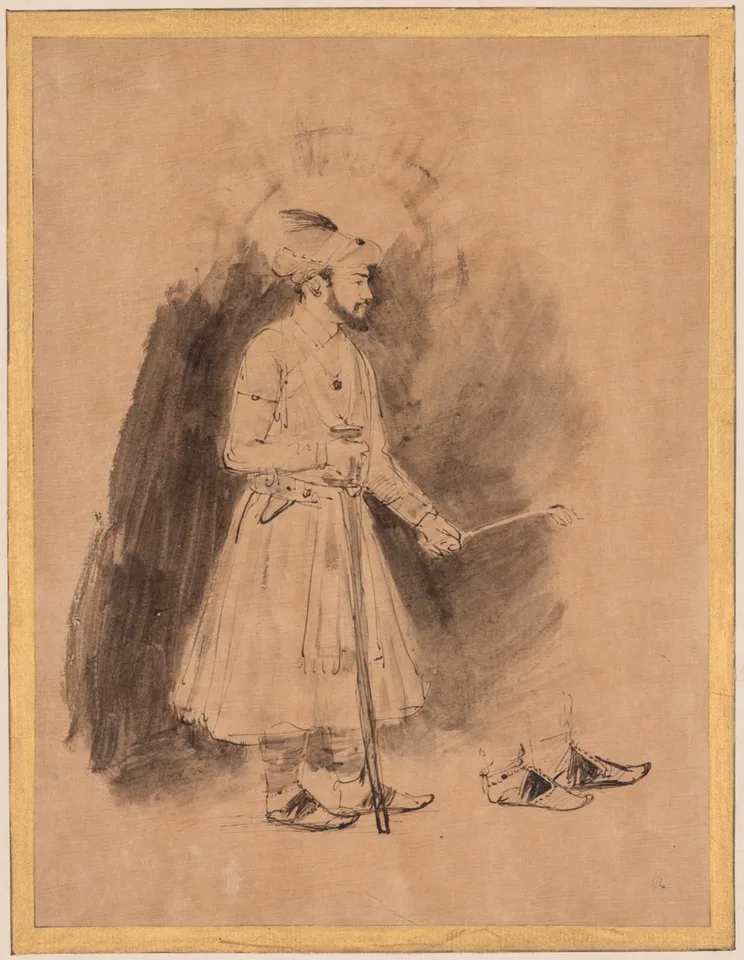
A light arc around the head
Rembrandt transforms a Mughal ruler’s nimbus through scraped ink and paper. The drawing records attention to a miniature, not a personal encounter with Shah Jahan.
Carry this question: What changes when a halo is made by removing material?
Open the artwork ↗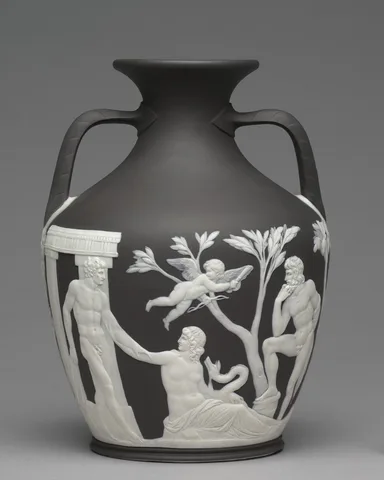
White figures on dark ground
White relief on a dark body translates a Roman glass vessel into jasperware. Close resemblance makes the ceramic replica’s distinct date and material especially important.
Carry this question: Which visual relationship survives the change from glass to ceramic?
Open the artwork ↗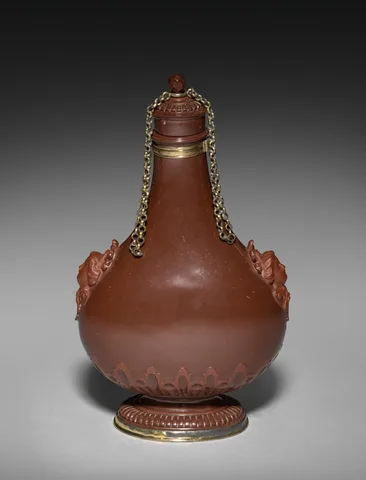
The polished red body
Meissen’s polished red stoneware draws on Chinese Yixing inspiration. Its sheen and silver-gilt mounts create a composite European object rather than a porcelain vessel or a Chinese import.
Carry this question: What might mislead the eye about the body’s material?
Open the artwork ↗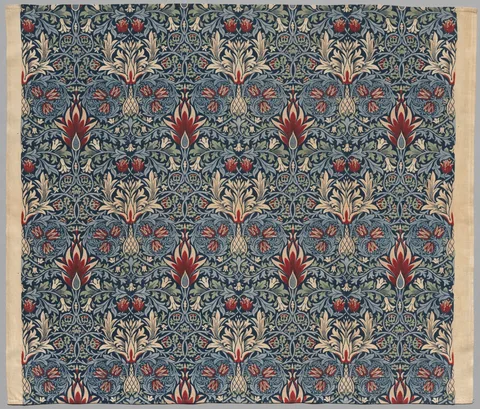
Repeated red flower points
The present cloth imitates an earlier Morris design and retains an early twentieth-century object date. The museum connects the palette with silk imports from British India and identifies English fritillaries among the motifs, giving the pattern more than one source of inspiration.
Carry this question: Which date belongs to the design, and which to this cloth?
Open the artwork ↗Look at a pair more closely
- Ceramic answers to distant models
Wedgwood’s Portland Vase and Meissen’s red bottle
Read with the sources
Historical context follows the individual museum records linked on each artwork page. These routes make original comparisons of visible form; resemblance alone is not evidence of shared meaning or direct influence.