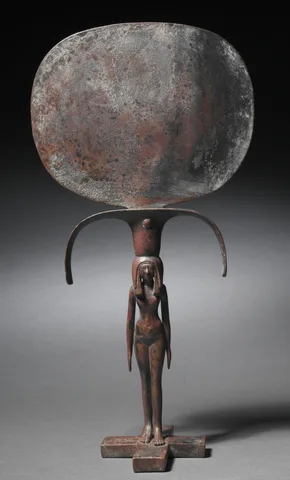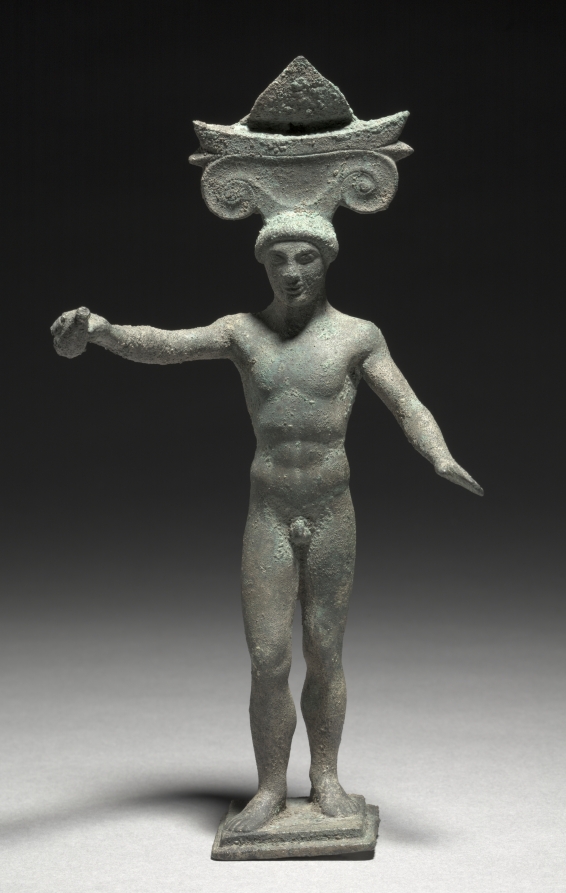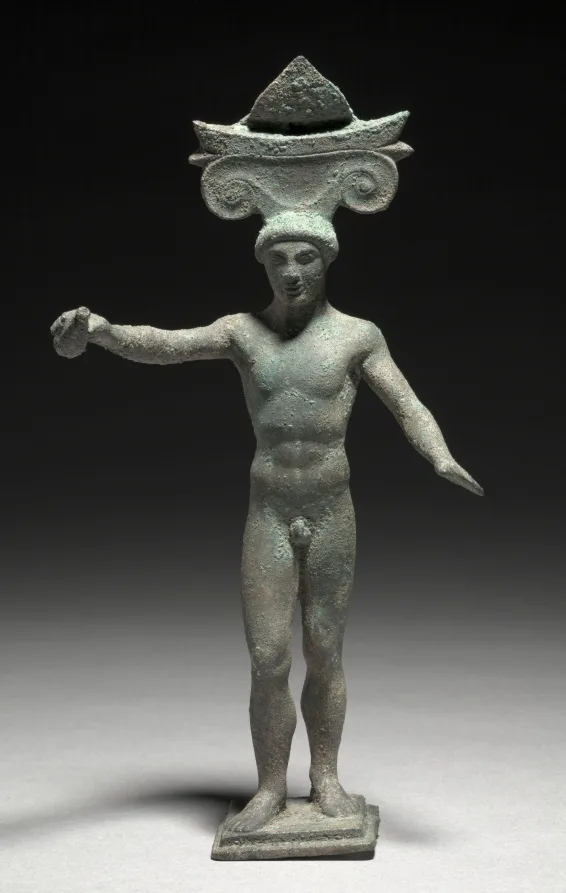
A small athlete stands beneath an oversized scroll-shaped support, evidence of a mirror that no longer completes the object.
The youth's outstretched arms and slight stride make the body seem active, but the large structure above the head changes the reading. Curled forms and a triangular projection are not ordinary headgear. Together with the base, they suggest a support designed to hold another part, now missing from the surviving object.
The museum identifies a mirror support and proposes an athletic figure. The small oil vessel in the right hand could relate to preparing the body for competition or to an offering for victory. Those alternatives should remain alternatives. The mirror was made separately and attached above the head, so the small bronze body once belonged to a more complete useful object. Without that account, a viewer might mistake it for an independent statuette or a figure wearing a strange crown. Construction details and carried attributes together offer a better reading than either alone.
The athletic identification and the oil's specific use are qualified. The original mirror is missing, and a possible Locrian origin should not be presented as a securely documented findspot.