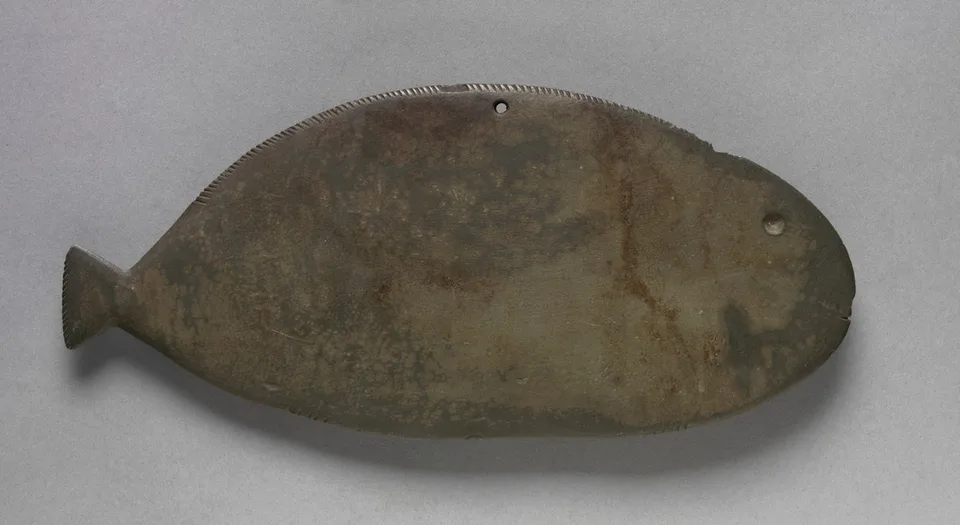
A fish-shaped stone leaves its broad centre plain, balancing a recognizable animal outline with a surface made for grinding pigment.
Stone palettes were used to grind pigments for eye paint in ancient Egypt. The museum distinguishes green malachite and black galena as important materials for this practice. This Predynastic example turns the grinding surface into a fish without filling it with carved scales. A recognizable tail, eye and upper edge carry the animal reference, while the broad flat body remains available for practical work.
The contrast between shaped boundary and plain centre is the object’s key economy. The eye is small but decisive, and the short cuts along the back suggest texture without taking over the working field. A drilled hole near the top belongs to the physical object, although this view does not establish how it was used. The museum also discusses possible funerary associations of black and green pigments with fertile soil and vegetation. Those wider interpretations should remain separate from the visible fish and the well-supported function of pigment preparation.
The record does not identify surviving pigment on this palette or establish its particular burial context. Wider interpretations of black and green as regenerative colours remain contextual possibilities.