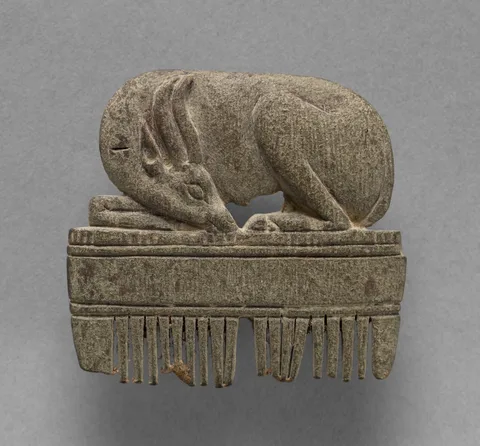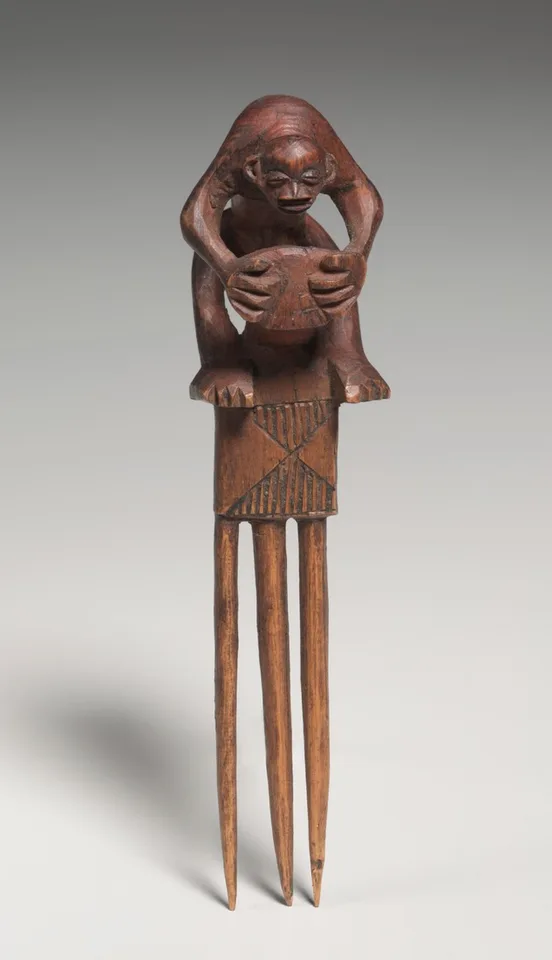
A drummer leans over a rounded instrument above three long teeth, joining a lively little figure to an intimate object.
The museum identifies this small carving as a Chokwe comb made for a female patron. A drummer occupies its upper end, turning an object associated with grooming into a compact image of performance. The body leans toward the drum, and the large hands hold attention at the centre. No sound is present, yet the compressed pose gives the figure an active quality that contrasts with the comb’s long, straight teeth.
The carver makes a sequence of different shapes from one material. A rounded head leads to curving arms and drum, then to a flat rectangular panel and three narrow prongs. Diagonal cuts decorate the transition between figure and teeth. This shift from modeled body to geometric structure lets the image and practical object remain legible together. The museum’s short account does not name the drummer or patron, so the precise occasion of use remains open. The visible relationship between grasping hands and grooming teeth is a more secure starting point.
The record identifies a drummer and female patrons for this example, but gives no named musician, owner or occasion. A performance narrative should not be invented from the pose.