Figures with a purpose
A small figure can serve a larger object, and a working surface can remain deliberately empty while its rim becomes elaborate. This route follows five distinct African objects through details that explain their particular roles. It also keeps collection history in view: two works from Benin do not automatically share the same date, use or path into the museum.
Begin the journey ↓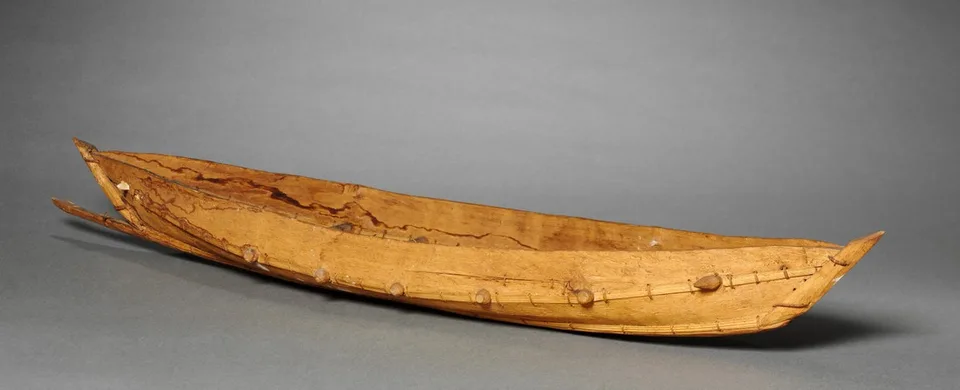
Construction at a small scale
The repeated ties along the hull preserve a way of joining wooden panels. The museum associates the model with sewn-plank canoes, while qualifying its geographic attribution and the older “war canoe” label.
Carry this question: What does the seam reveal that the outline cannot?
Open the artwork ↗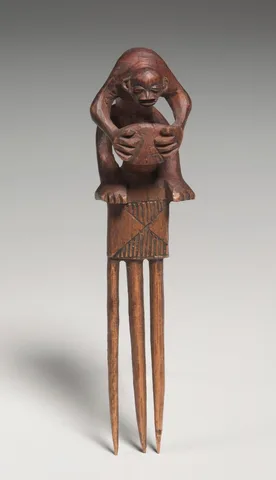
Music above the teeth
The hands curve around a drum above the comb’s working portion. The represented musician gives an intimate object a small scene, but the record does not identify a named performer or occasion.
Carry this question: How do the hands help identify the upper figure?
Open the artwork ↗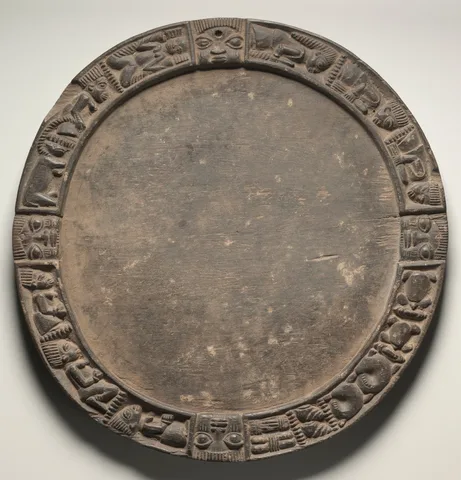
An open centre with a task
The relatively plain centre contrasts with the carved rim because it provided a working field for powder and divinatory marks. An undecorated area can be an intentional and necessary part of the design.
Carry this question: Why might this centre need to remain open?
Open the artwork ↗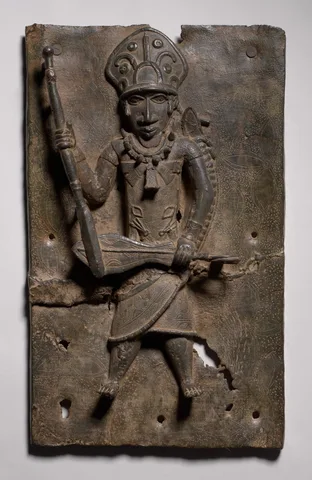
A staff and a disrupted history
The staff helps distinguish the warrior’s role within the palace plaque. Read that visible sign beside the museum’s record of the 1897 Siege of Benin and its qualified account of later ownership.
Carry this question: How does the staff project from the patterned field?
Open the artwork ↗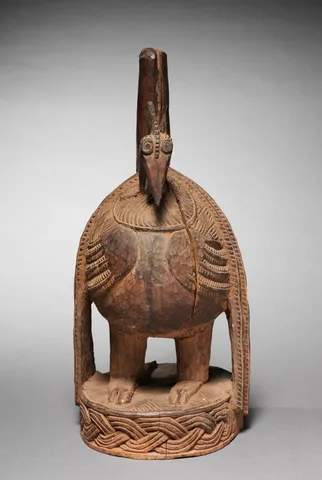
A different Benin history
The hen’s upright head gives the carved bird a formal presence associated with women’s ancestral shrines. This twentieth-century object has a different recorded history from the palace plaque; place alone does not make their biographies identical.
Carry this question: How does the frontal head organize the bird’s posture?
Open the artwork ↗Look at a pair more closely
- Figures above the teeth
A Chokwe drummer and an Egyptian gazelle animate two carved combs.
- Plain centres, speaking edges
A fish palette and an Ifá tray reserve open space for work.
Read with the sources
Historical context follows the individual museum records linked on each artwork page. These routes make original comparisons of visible form; resemblance alone is not evidence of shared meaning or direct influence.