Read the
Picture
An open collection
Central Tibet · Painting

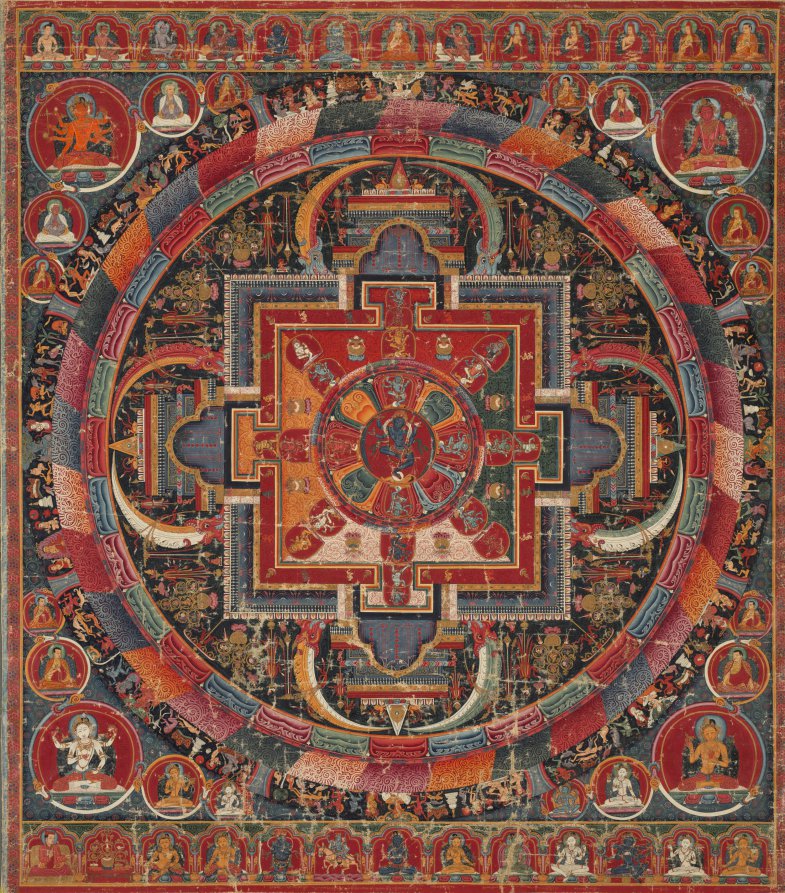
Twenty-three Deity Nairatma Mandala

Maker unrecorded · c. 1375

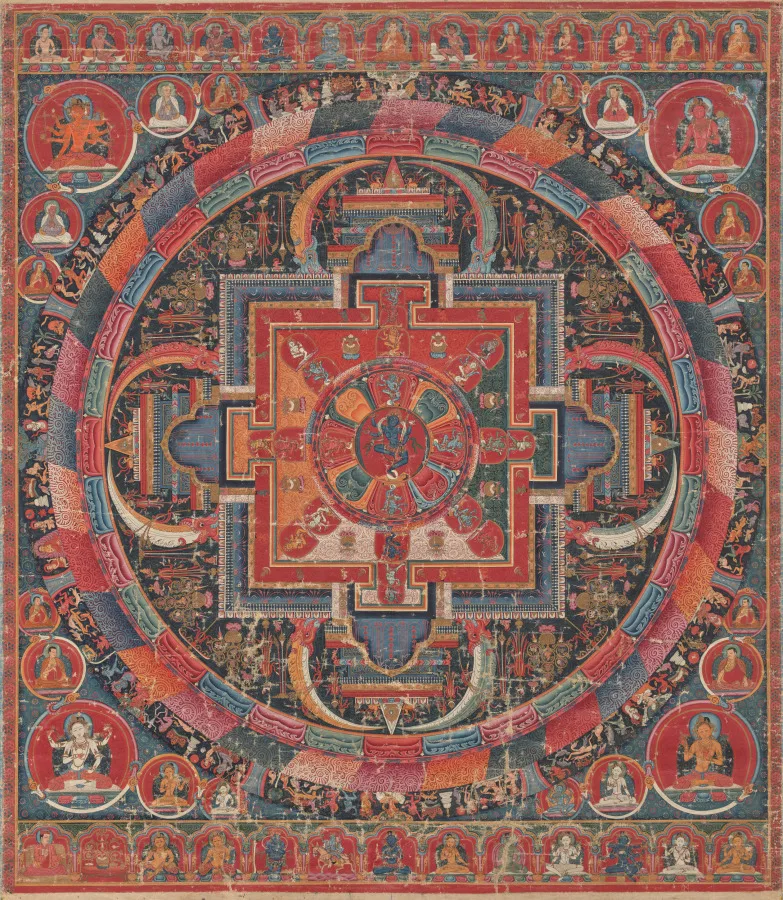
A densely painted rectangular cloth contains concentric coloured rings around a square palace-like plan with projecting gateways. A small dancing blue figure occupies the centre, surrounded by other figures. The outer ring contains many tiny scenes. Rows of seated teachers or sacred figures run along the top and bottom borders.
100%

Drag to move · Pinch or +/− to zoom · Arrow keys to pan · 0 to reset

The Cleveland Museum of Art · 1993.4 · Image: CC0Museum image ↗
A little context

Move from the outer ring toward a carefully ordered centre, while remembering that this diagram belongs to a guided religious practice.

This painting has a centre, but reaching it visually takes work. Coloured rings surround a square, palace-like structure with projecting entrances. Smaller figures occupy its ordered spaces, while a blue dancing figure stands at the middle. The museum identifies the central deity as Nairatma and describes the mandala as a diagram of a realm of enlightened beings.

The outermost ring includes cremation-ground scenes: burning bodies, animals, and reminders of death. In the museum’s account, these relate to practices for confronting fear and attachment to the body. The painting was not simply a decorative maze or a self-guided puzzle. Accomplished teachers guided practitioners through its sections and their meanings. For a first encounter, compare the dense outer activity with the ordered centre, then notice the teachers along the border. These visible relationships help explain why a religious diagram can hold landscape, architecture, figures, and lineage together without behaving like a single ordinary viewpoint.

A careful reading

This overview describes visible organisation and the museum’s contextual account; it is not instruction in tantric practice. Some small scenes involve death and human remains. Their meaning depends on religious teaching beyond this short introduction.
Try your eye

Which description best respects the mandala’s original setting?

Where this reading begins

  • Twenty-three Deity Nairatma Mandala — collection record — The Cleveland Museum of Art. Supports object identification, dating, materials, attribution, and the contextual interpretation distinguished from direct visual observations in this guide. Museum record updated 2026-10-08; accessed 2026-11-13.

Our observations describe the supplied museum photograph. Historical identifications and context follow the cited collection record; interpretive limits are stated above. This is an independent guide, not a museum endorsement.

Image rights & attribution

Twenty-three Deity Nairatma Mandala, c. 1375. Central Tibet. Gum tempera, ink, and gold on cloth; overall: 82.5 x 72.4 cm (32 1/2 x 28 1/2 in.). The Cleveland Museum of Art, Purchase from the J. H. Wade Fund, 1993.4

Individual API record marked CC0; checked 2026-11-13. CC0 1.0 dedication. Record date: 2026-10-08 11:20:11.670000. Web JPEG downloaded unchanged; responsive WebP and zoom derivatives resized and recompressed; numbered annotation overlay separate from image.