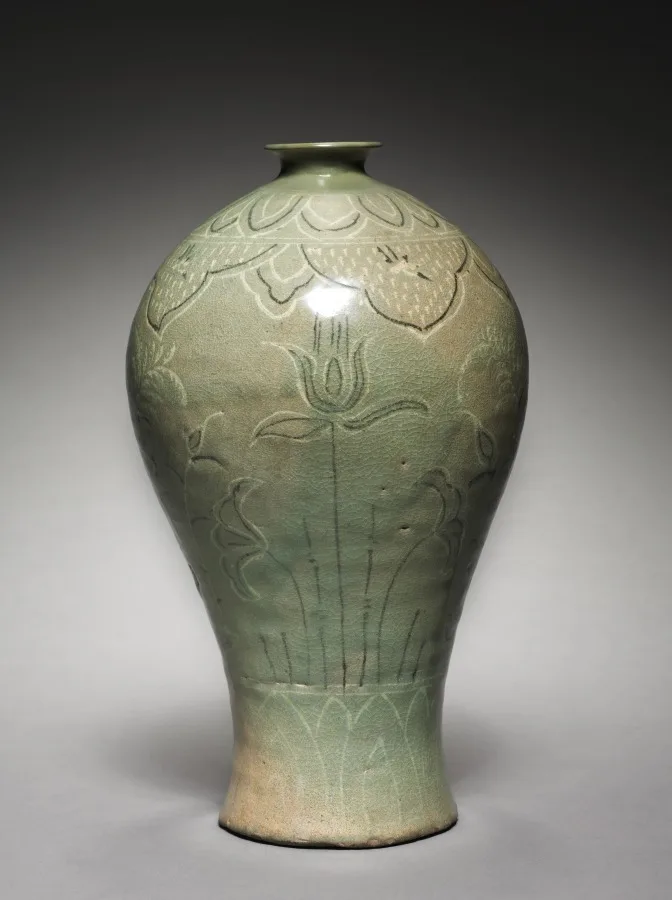
A tiny opening, generous shoulders, and inlaid plants suggest a vessel whose familiar name can lead the eye astray.
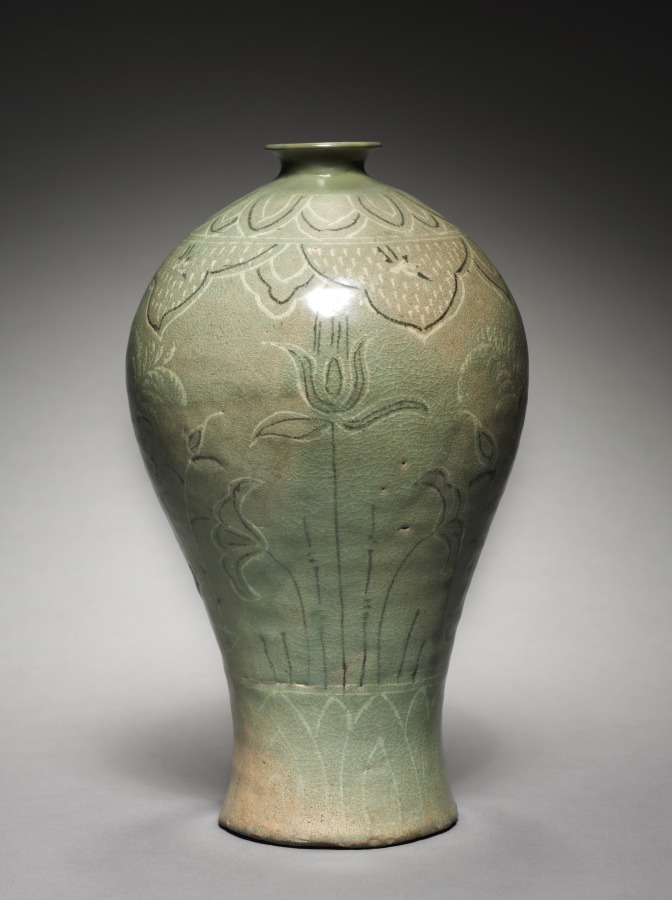
Begin with the shape. This Goryeo-period Korean vessel has a small opening above wide rounded shoulders, then a body that narrows toward the foot. Such proportions are different from an open bowl or pouring jug, and they encourage questions about storage. The museum describes this vase type in relation to alcoholic drinks, while also noting research into uses such as storing cooking liquids.
The name “prunus vase” may suggest a branch of plum blossoms, but a descriptive name does not settle an object’s original function. The plant actually depicted here is part of an inlaid lotus and reed design. Pale and dark slips form lines beneath the green celadon surface, allowing ornament to remain legible without a strong contrast of many colours. Follow the tall stems as they echo the vessel’s body, then compare them with the compact decorative bands around the shoulder. The object combines practical containment, controlled ceramic technique, and the pleasure of looking at growing forms.
“Prunus vase” is a conventional name, not proof that this vessel held plum blossoms. The museum discusses several uses for this vessel type; its exact contents and missing original lid are not established here.
What can we safely infer from the name “prunus vase”?
Practise looking at Prunus Vase with Inlaid Lotus and Reed Design →