A dancing body holds creation, destruction, reassurance, and release together inside a single bronze circle of fire.
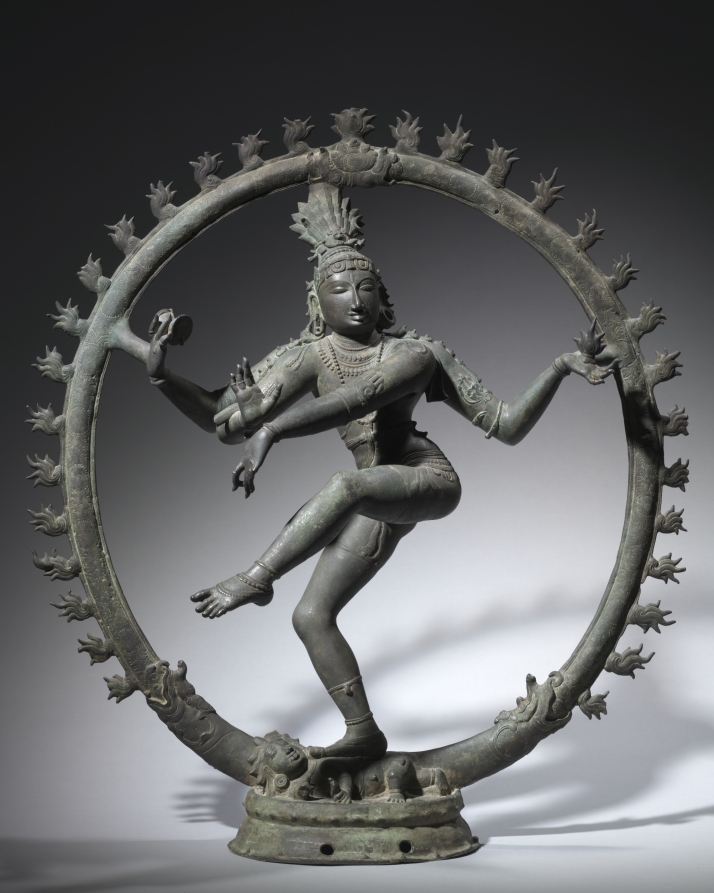
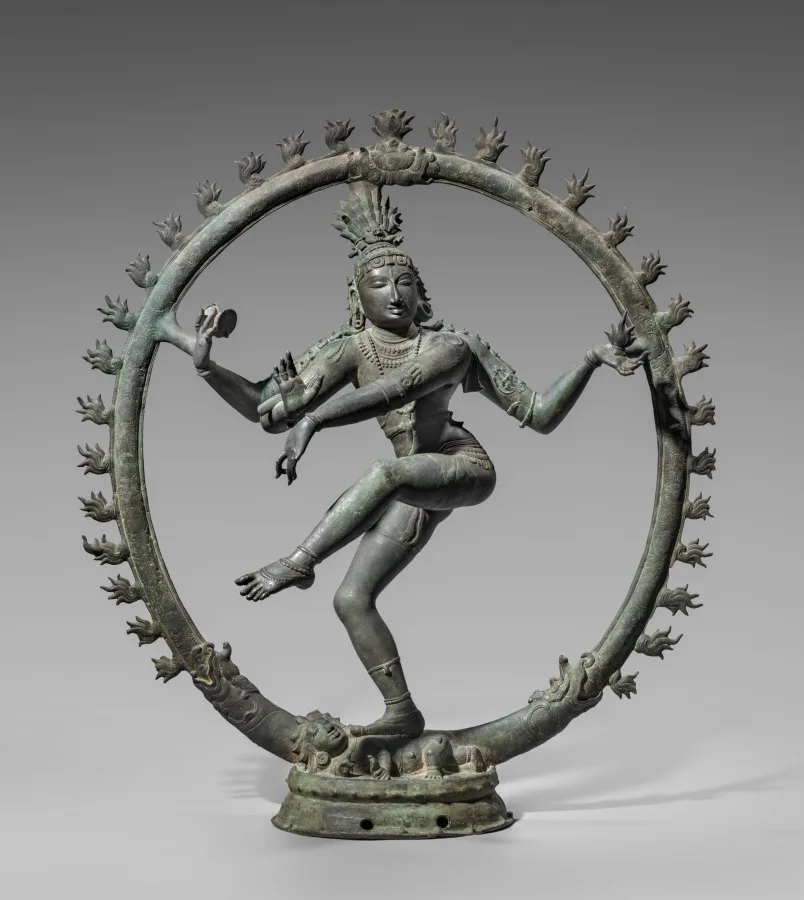
Look at the contrast between the busy outline and the composed face. Shiva’s arms, flying hair, lifted leg, and surrounding flames make the bronze seem to move, while the face provides a stable centre. This Chola-period sculpture from Tamil Nadu presents Shiva as Nataraja, Lord of Dance. For devotees who understand Shiva as supreme, the dance expresses his role in the recurring creation and destruction of the world.
The figure gives the eye several routes to follow. One raised hand carries a drum; another carries fire. A lower palm faces outward, while the other lower arm directs attention toward the raised foot. The museum reads these details together as an assurance that devotion can bring release from the cycle of birth and death. Beneath the grounded foot, a small figure personifies ignorance. The sculpture does not merely tell a story from beginning to end: it holds several actions and ideas in a balanced, simultaneous form.
This explanation follows the museum’s reading of this Chola-period Nataraja. Hindu traditions are diverse, and the meanings of a gesture or attribute should be checked within the particular image and tradition.