Scale, weather, and inward landscape
Landscape can establish physical scale, cultural belonging, spiritual reflection, or an inward mood. These six works use different proportions of figure, tree, water, and sky to make those possibilities visible. Begin with small bodies in a large valley, then watch the field narrow, flatten, and acquire sharper symbolic or emotional associations without assuming that all nature imagery means the same thing.
Begin the journey ↓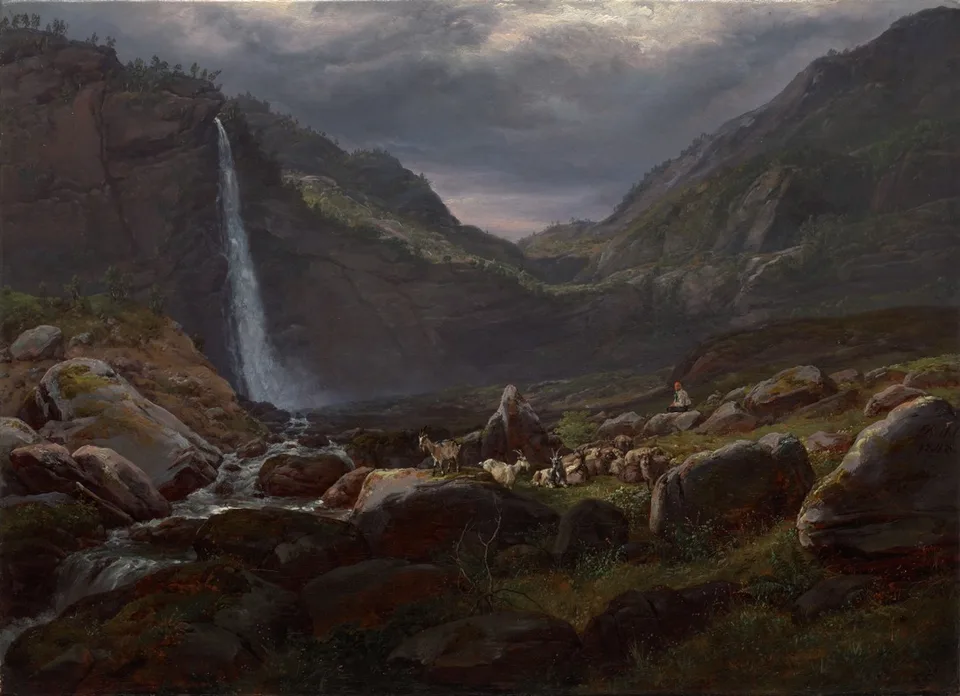
The small herd
The tiny herd measures the valley while making it inhabited. Dahl’s view also participated in Norwegian cultural self-definition, so the spectacular natural landmark has a social history.
Carry this question: How does the herd change your estimate of the rocks?
Open the artwork ↗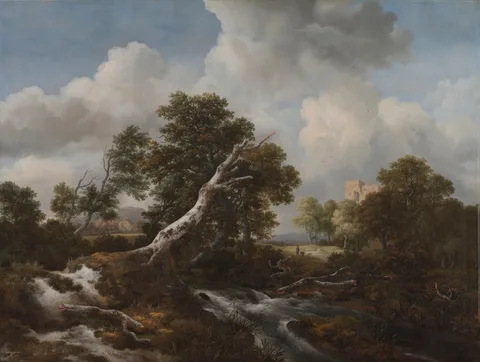
The silver dead trunk
A dead trunk now dominates the foreground and points across moving water. The museum connects these materials with time, but their compositional roles remain directly visible.
Carry this question: Which direction does the trunk ask your eye to follow?
Open the artwork ↗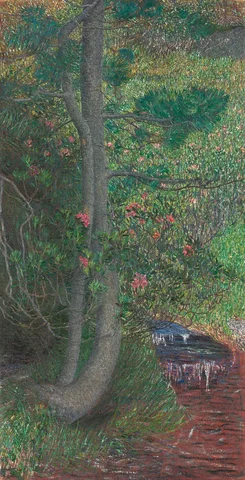
The curving trunk
The tree becomes so close that it almost replaces the landscape. Broken strokes fill the narrow field, changing expansive observation into a concentrated encounter with bark and foliage.
Carry this question: What happens to distance when the trunk fills the frame?
Open the artwork ↗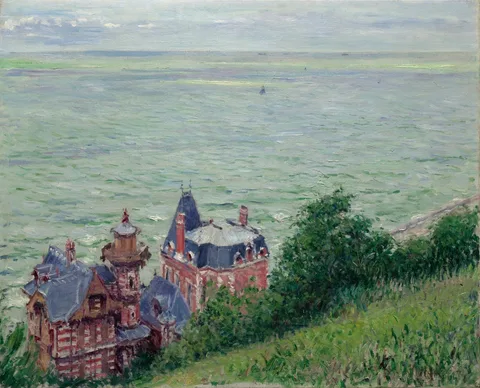
Elaborate roofs below us
From a cliff above private villas, the sea expands again. The roofs establish a specific elevated perch and connect scenic leisure with property along the shoreline.
Carry this question: How do the houses frame access to the sea?
Open the artwork ↗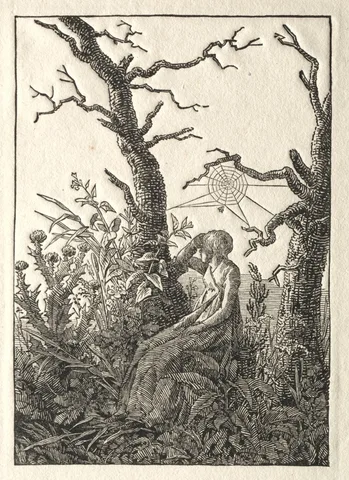
The spider web
A small web gains weight within a pale gap between barren trees. Friedrich’s spiritual associations depend on precise isolation of details, while the woman’s exact thoughts remain unresolved.
Carry this question: Why does this delicate structure seem unusually prominent?
Open the artwork ↗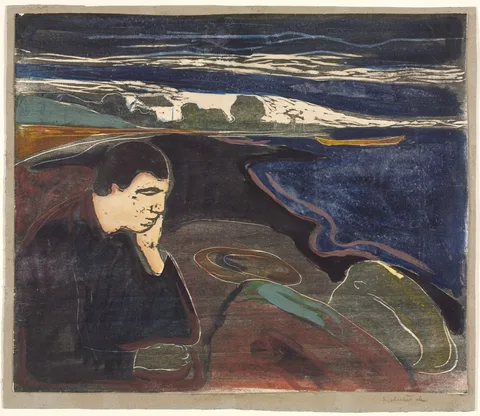
The curling shoreline
Munch’s curving shore and flattened bands carry the image’s melancholy across the surface. Grain and hand coloring make emotional atmosphere inseparable from this particular printed impression.
Carry this question: Where does the shoreline seem to stop behaving like measured depth?
Open the artwork ↗Read with the sources
Historical context follows the individual museum records linked on each artwork page. These routes make original comparisons of visible form; resemblance alone is not evidence of shared meaning or direct influence.
- Feige Waterfall (Feigefossen), Lysterfjord, Norway — museum collection record
- Low Waterfall in a Wooded Landscape with a Dead Beech Tree — museum collection record
- Pine Tree — museum collection record
- Villas at Trouville — museum collection record
- The Woman with the Spider Web between Bare Trees — museum collection record
- Evening, Melancholy I — museum collection record